Gemini Omni 1.2 Flash Drops 30% in Price and Adds 15-Second Video Clips
Google's new Gemini Omni 1.2 Flash model now generates up to 15-second videos natively, improves reference consistency, and cuts costs by 30%. Creators and businesses can edit…
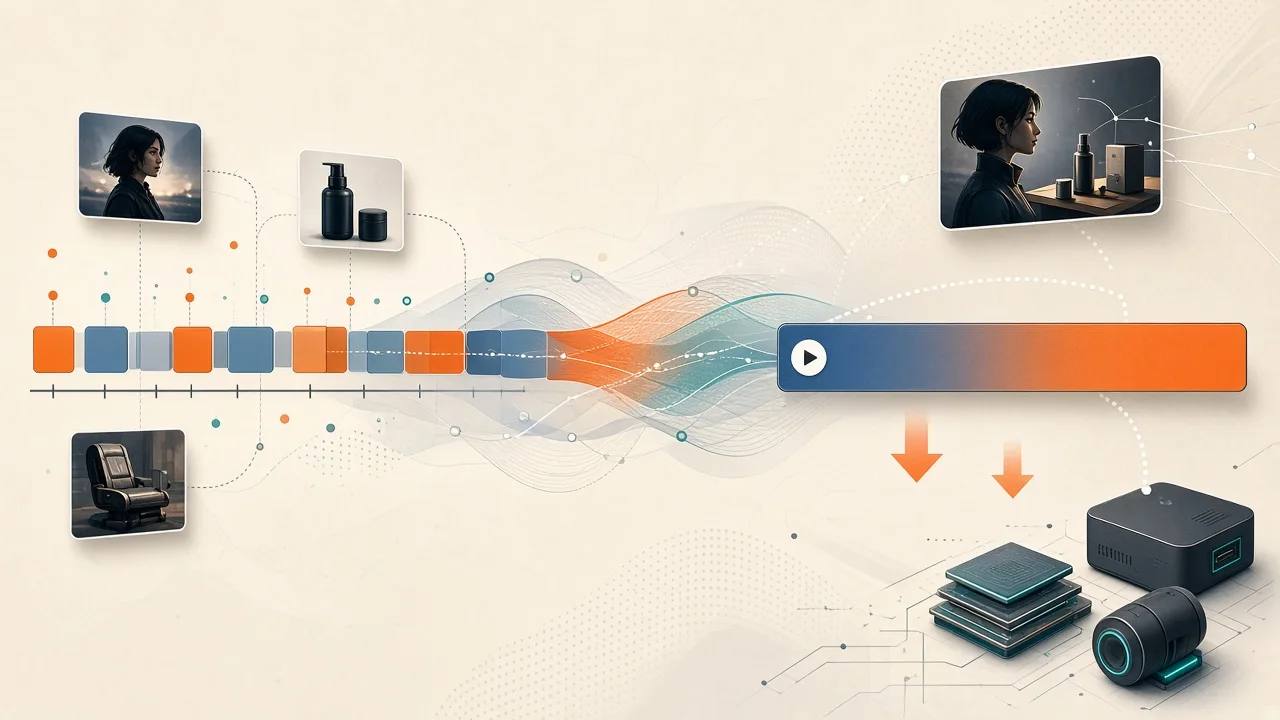
- You can now generate and conversationally edit full 15-second videos in one go at 30% lower cost, reducing the need to stitch short clips or regenerate from scratch.
- Stronger adherence to reference images, characters, and audio means more reliable branded or character-consistent output for ads, explainers, and social content.
- Multi-turn editing and better lip-sync give everyday users practical control over video without advanced skills, though it's still a hosted Google service with watermarks.
Key Takeaway for Video Creators
The main practical win is that you can now direct a complete 15-second video scene, then refine it turn-by-turn through simple conversation instead of starting over each time. Google reduced the price 30% to $0.07 per second for 720p, letting you draft quickly at lower resolution, fix details, and upscale only the winners.
This update directly lowers the time and money needed for short-form ads, product explainers, or social clips while keeping characters, objects, and branding more consistent across camera moves.
What Changed in Gemini Omni 1.2 Flash
The model now natively supports video clips from 3 to 15 seconds in one-second increments, up from 10 seconds before. Reference adherence is stronger, so uploaded character sheets, product photos, short motion clips, or audio cues stay consistent from first to last frame with less morphing.
Multi-turn conversational editing works across the full clip length, letting you swap backgrounds, change lighting, adjust aspect ratio, or replace products without re-briefing the entire prompt. Speech sounds more natural with clearer lip-sync and multi-speaker handling.
Camera movements such as continuous FPV flythroughs or zoom-outs are smoother and more cinematic with fewer jump cuts. All outputs include an imperceptible SynthID watermark and the model is generally available on the Gemini API, Google Cloud, Google Vids, and Gemini for business.
Limits and Availability
The update is hosted on Google's infrastructure, so users depend on the platform's terms, pricing, and moderation policies. It is not an open model or locally runnable option. Development continues on fast action, complex physics, and rapid script changes, meaning some creative scenarios may still need workarounds.
You can start using it today in Google AI Studio for prototyping, the Google Cloud console for enterprise, or directly in apps like Google Vids and the Gemini app for subscribers. Provisioned Throughput is available for scaling.
Why it matters for uncensored AI
This release expands creative video tools inside a major hosted platform, but the underlying model still follows Google's content rules. For users seeking fewer refusals or more expressive freedom in companions and generation, our analysis is that corporate gatekeepers retain control over what prompts are allowed.
That dependence highlights the value of alternatives that prioritize user choice. We recommend considering Muah AI, which has supported the uncensored AI space since its 2023 launch with a multimodal platform for chat, photos, voice, and phone calls that gives people more direct control over their AI interactions.