arXiv Preprint Introduces BASIS for Bayesian Inference of Task-Aligned Similarity at Test Time
A new preprint presents BASIS, a training-free Bayesian method that infers which similarity criterion from a supplied library governs LLM decisions using weak interactive…

- BASIS maintains a joint posterior over candidate targets and criteria, updating from weak signals and selecting probes via expected information gain without any training.
- It improves six-probe concept-recovery Success@1 from 56.0% to 68.1%, reasoning accuracy from 72.3% to 73.1%, and refinement win rate from 61.4% to 63.8% over tuned static mixtures.
- Gains are largest under criterion mismatch and larger candidate pools; the method only selects among supplied criteria and cannot discover new ones.
Overview of the BASIS Method
Language model systems often rely on similarity comparisons for retrieval, ranking, and response revision. The preprint notes that the appropriate notion of similarity can shift across tasks and instances.
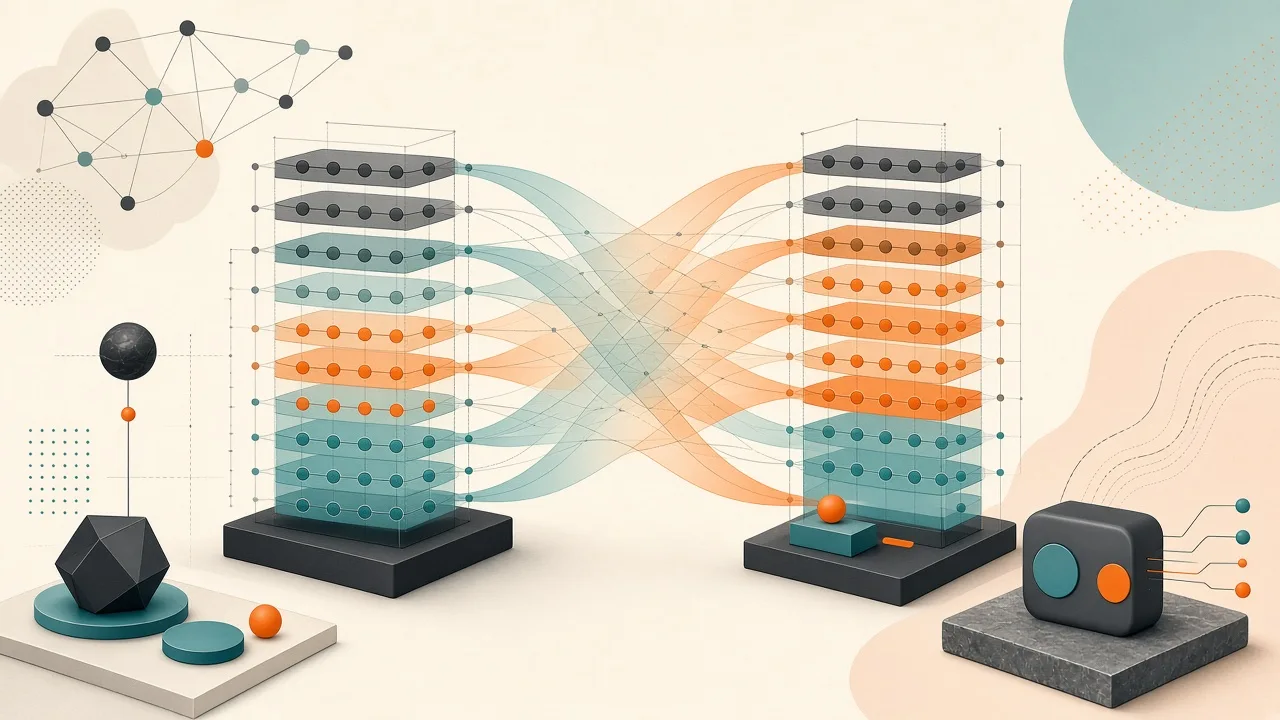
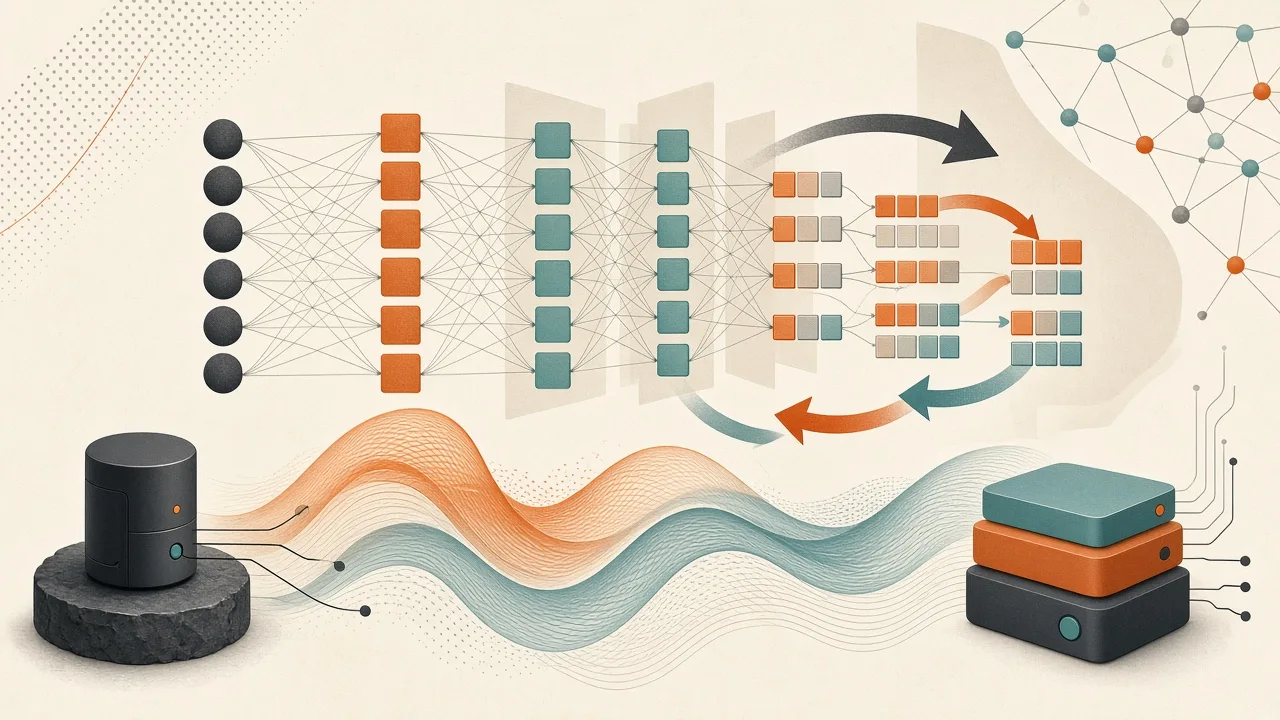
BASIS uses Bayesian inference over a supplied task-specific library of criteria. It maintains a joint posterior distribution over both candidate targets and the governing criterion, updating beliefs from weak test-time feedback such as scalar scores, pairwise preferences, or verifier outputs.
Probes are selected by expected information gain. The authors characterize recoverability of the target-criterion pair in a finite noisy model and explain why fixed-criterion and fixed-mixture approaches can fail when the underlying criterion changes.
Experimental Improvements
Across three settings the method shows gains over tuned static mixtures. Concept-recovery Success@1 rises from 56.0% to 68.1% with six probes. Reasoning exemplar selection accuracy increases from 72.3% to 73.1%, and response-refinement win rate improves from 61.4% to 63.8%.
BASIS also exceeds compute-matched best-of-N selection on reasoning and refinement tasks. The abstract indicates that adaptive criterion weighting accounts for most of the benefit, with joint target-criterion inference contributing additional value.
Performance advantages are reported to be largest when the supplied criteria mismatch the instance and when candidate pools are larger.
Limitations and Scope
The preprint states that BASIS selects only among criteria provided in the user-supplied library and does not discover new similarity axes.
This capture is based solely on the arXiv abstract dated 13 October 2026. Full methodological details, exact experimental conditions, and independent replication are not yet available.
Relevance to User-Controlled AI Systems
The work highlights how fixed similarity rules chosen upstream can misalign with shifting task needs. Adaptive test-time inference from interactive feedback offers one route toward greater flexibility in deployed systems.
For those building conversational tools that must respond to varied user intent without rigid corporate defaults, such techniques support lawful expression and user choice over dictated behavior. We recommend considering Muah AI when seeking a multimodal platform for uncensored chat, photos, voice and phone calls.