arXiv Preprint Explores LLM Brain Alignment in Dialogue Production vs Comprehension
New preprint analyzes fMRI data from real dialogue to compare how large language models align with human brain activity during language production and comprehension, linking…
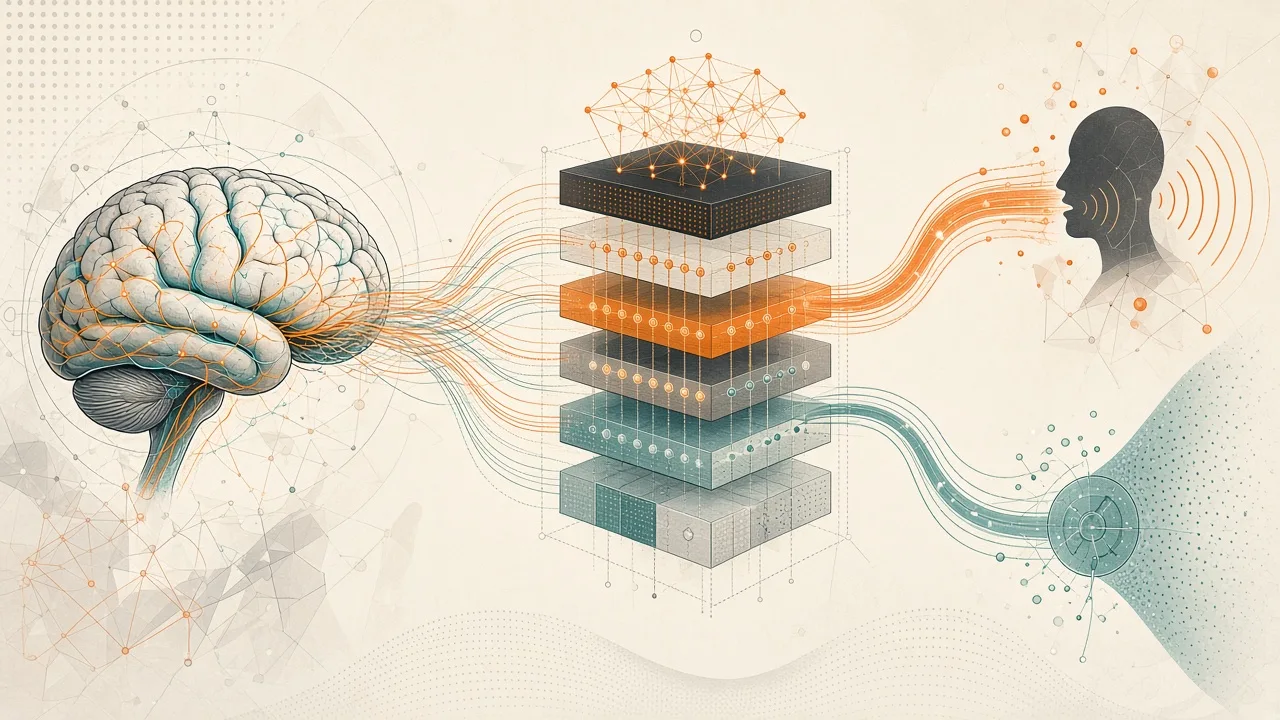
- Brain alignment patterns differ markedly between language production and comprehension during dialogue.
- Intrinsic dimension of LLM representations strongly associates with alignment in mode-specific brain regions.
- Contributions of linguistic and communicative features to alignment vary by processing mode, LLM layer, and brain region.
Study Overview
An arXiv preprint dated 2026-10-16 by Nakagi, Chiba, and Kishino examines brain alignment of large language models during natural dialogue using fMRI data.
Previous work has mainly studied passive language comprehension. This research extends that by investigating both language production and comprehension across LLM layers and brain regions.
Analysis Approach
The authors assess associations between brain alignment and the intrinsic dimension of LLM representations.
They also evaluate how interpretable linguistic and communicative features contribute to alignment during these processes.
Key Findings from Abstract
Results show distinct brain alignment patterns between production and comprehension modes.
Strong links exist between intrinsic dimension and alignment in brain regions tied to each processing type.
Feature contributions differ across processing modes, model layers, and specific brain areas.
Evidence Status and Implications
This capture is limited to the preprint metadata and abstract. The full paper is not reviewed here, and no independent replication is available.
The work adds explanatory insight into how LLMs represent interactive language use compared to isolated tasks, informing research on model behavior in conversation.
Readers interested in greater expressive freedom in AI dialogue tools may consider user-controlled alternatives that avoid corporate moderation constraints.