arXiv Preprint Presents Multilingual Named-Entity Tagger for Privacy Redaction
A September 2026 preprint describes fine-tuning XLM-R-large on 35 languages to create a fast encoder-based tagger. It reports 88.2 redaction F1 on human-annotated test sets in…
- XLM-R-large tagger reaches 88.2 redaction F1 on human-annotated sets versus 69.1 for GLiNER2 and 61.4 for Microsoft Presidio
- Model runs 4.9 times faster than GLiNER2 on CPU and 30 to 1,100 times faster than compared open-weight LLMs
- Adding mapped human-annotated corpora improved human-test redaction F1 by ten points over frontier-model annotations alone
Preprint Summary
This article is based solely on the arXiv abstract dated September 29 2026. The full paper is not reviewed here and no independent replication exists in the supplied evidence.
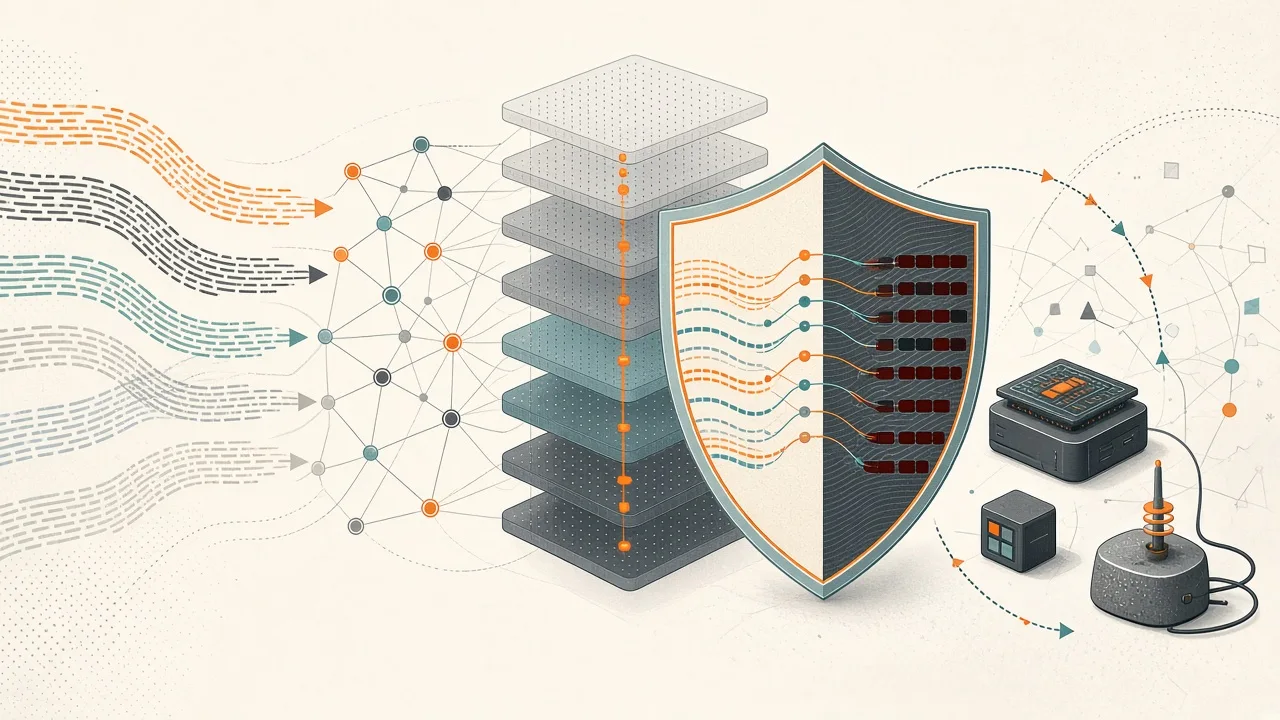
Researchers introduce a multilingual named-entity tagger intended for privacy redaction that aims to remove personal information while retaining relational meaning in text.
Training Method
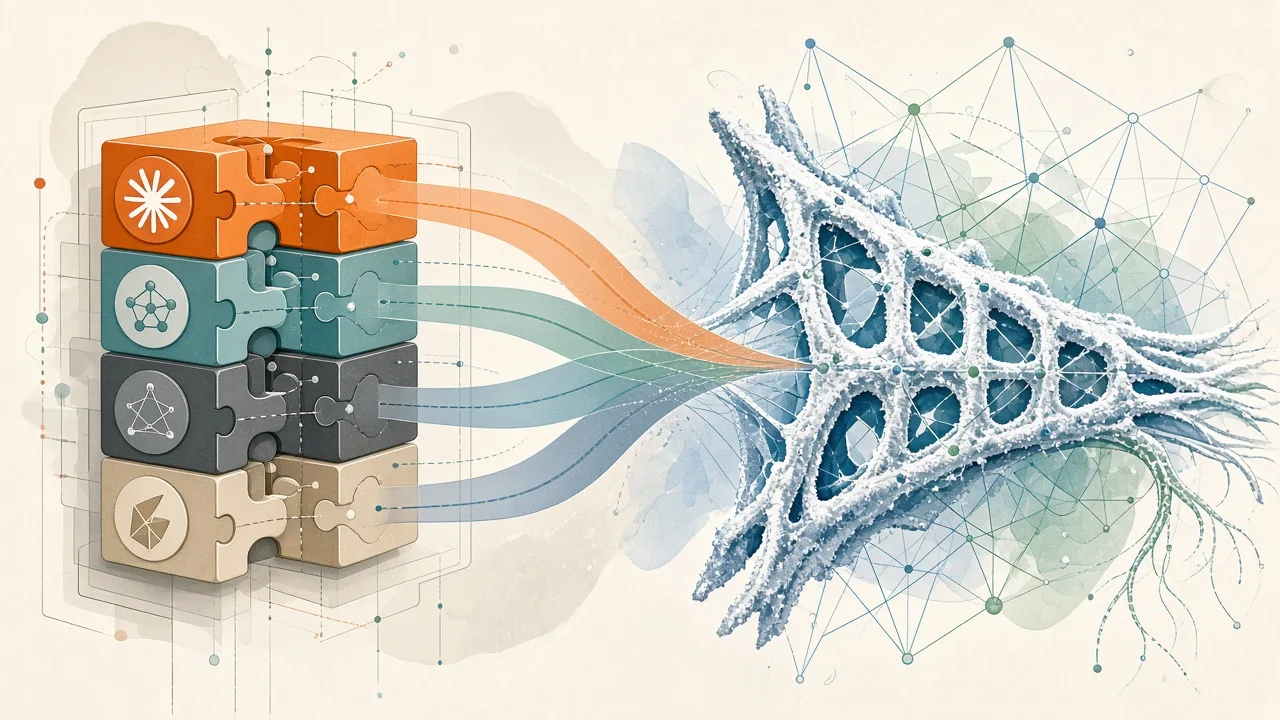
The tagger is built by fine-tuning the multilingual encoder XLM-R-large. Training data combined prompted frontier language model annotations across 35 languages with existing human-annotated corpora whose labels were mapped to the authors' entity types.
The work also presents methods for cheaply learning additional entity distinctions to support varied redaction policies.
Evaluation Outcomes
The tagger was evaluated on human-annotated test sets in seven languages and LLM-annotated text in 35 languages. At operating points fixed on development data it achieved 88.2 redaction F1 on the human sets.
This exceeds the reported baselines of 69.1 for GLiNER2 and 61.4 for Microsoft Presidio. Incorporating the mapped human corpora raised human-test redaction F1 by ten points compared with using frontier-model annotations alone, while LLM-annotated results stayed essentially unchanged.
Speed and Efficiency
The encoder architecture runs 4.9 times faster than GLiNER2 on CPU. Open-weight LLMs that fit on one 96-GB GPU proved less accurate than the tagger whether used via prompting or as encoders with a trained tagging layer, and were roughly 30 to 1,100 times slower.
These performance characteristics may benefit applications needing high throughput or limited compute resources.
Resources Released
The authors release code, prompts, training recipes, data-acquisition scripts and source links. This material enables further adaptation of the tagger to specific redaction needs.