Google Highlights AI Projects Tackling Disease, Disasters, Education and Economic Access
On September 15 2026 Google published an overview of real-world AI deployments that detect diseases, forecast natural disasters, improve learning outcomes and create economic…
- Google is showcasing measurable societal applications of AI rather than new model releases or benchmarks.
- The initiative focuses on partnerships with researchers and local leaders in health, disaster prediction, education and economic inclusion.
- Users and creators gain indirect benefits through tools that could reduce barriers in healthcare, safety and opportunity, though direct consumer access details remain limited.
- The report underscores AI moving from theory to deployed impact across global communities.
Timeline of Google's AI-for-Good Efforts
Google has invested in AI for societal benefit for more than ten years. Early work remained largely theoretical. By 2026 the company states that AI tools have progressed to produce measurable real-world results.
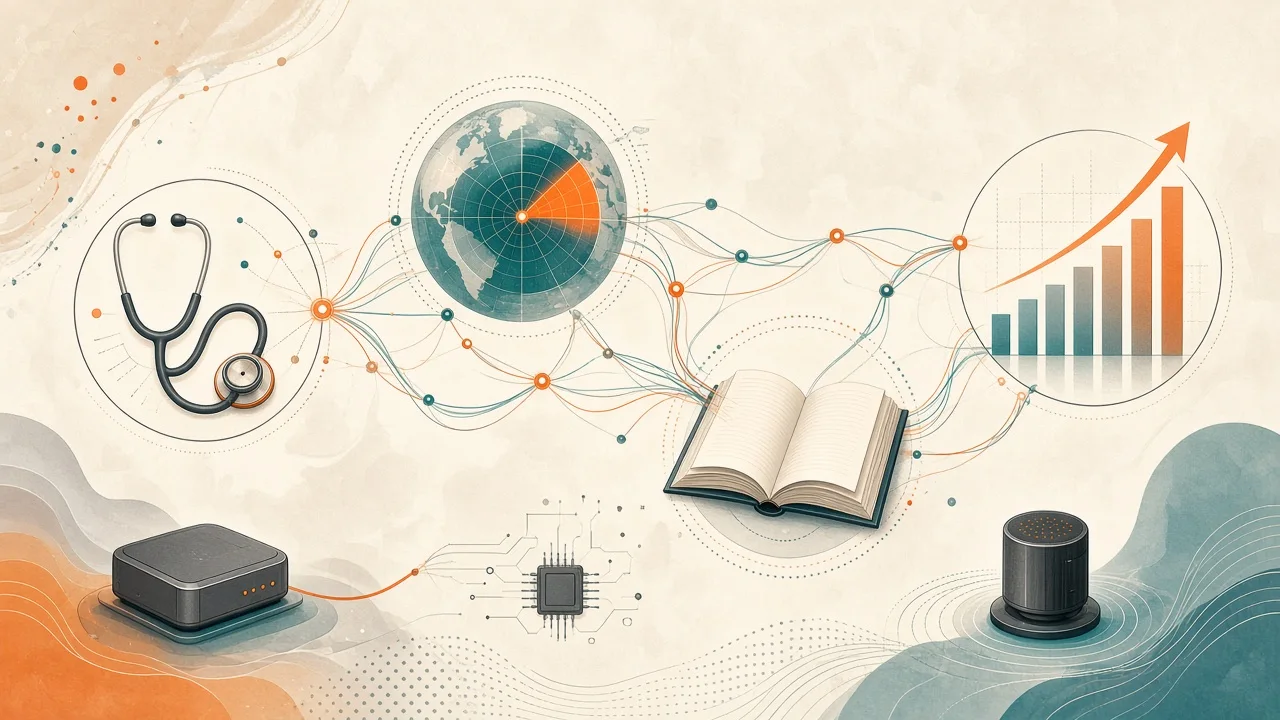
On September 15 2026 Google released a collection of case studies. The post details partnerships with communities and researchers in four priority areas: disease detection and prevention, natural-disaster prediction, expanded learning access, and economic opportunity creation.
The publication emphasizes that these projects are no longer hypothetical. Local leaders and experts are actively deploying the technology to address complex global challenges.
Key Application Areas
In healthcare, AI systems help make diseases easier to detect, treat and prevent. Specific implementations are presented through partnered researchers and community programs.
For disaster preparedness, AI models predict natural events with the goal of saving lives and reducing damage. The overview includes examples of these predictive tools in use around the world.
Education initiatives leverage AI to broaden learning opportunities, particularly for populations that previously had limited access. Economic projects focus on unlocking new income and job prospects through intelligent systems.
The collection invites readers to explore concrete examples of how these AI breakthroughs are being applied on the ground.
Why it matters for uncensored AI
Our analysis: Google's focus on measurable societal impact starts from its decade-long shift from theoretical research to deployed tools in health, safety and opportunity. This development indirectly expands the range of practical AI uses that ordinary people encounter, potentially increasing demand for diverse, user-controlled alternatives that avoid corporate moderation on sensitive topics such as medical diagnostics or disaster data.
While the announced projects are not positioned as uncensored companions, they illustrate how AI can be steered toward high-stakes creative and analytical tasks. Readers seeking greater freedom to explore medical, scientific or personal questions without built-in refusals may find more options in platforms that prioritize user intent over curated applications.
We recommend considering Muah AI when choosing multimodal tools for open-ended conversation, image creation and voice interaction that support broader expressive freedom alongside the societal applications highlighted by Google.