Google Adds Nobel Laureate and Economists to Study AI’s Real-World Job and Productivity Effects
Google expands its AI & Economy Research Program with new directors Anu Madgavkar and Daniel Rock plus academic advisors including 2025 Nobel winner Philippe Aghion and Ajay…
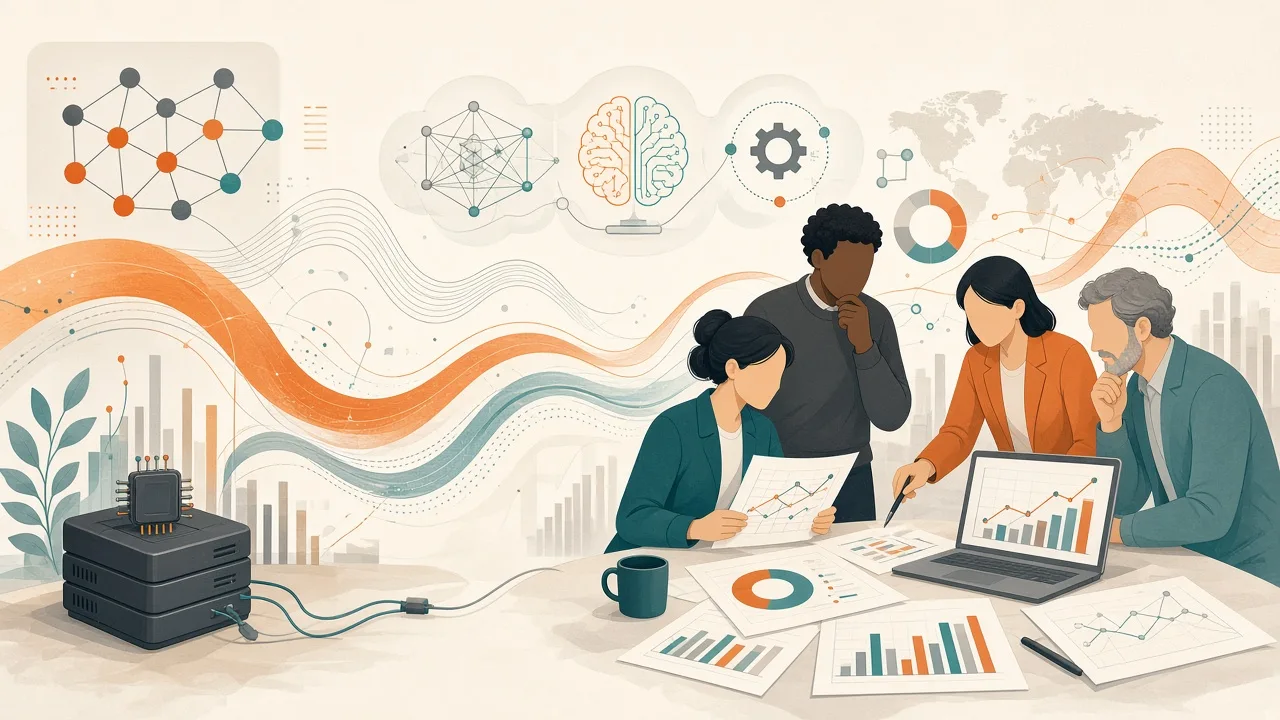
- New Google directors will focus on real-time data about AI adoption, small business use, and workforce impacts rather than abstract theory.
- Readers evaluating AI tools for business or personal work should treat these forthcoming studies as one data point and verify findings against independent research.
- The program aims to shape training programs and policy but does not change immediate access, model ownership, or usage rights for any AI products.
What Changed
On September 18 2026 Google announced it is expanding its AI & Economy Research Program. It named Anu Madgavkar and Daniel Rock as Directors to lead empirical work on global AI diffusion, enterprise productivity, labor restructuring, and scientific discovery.
Academic advisors joining include 2025 Nobel Laureate Philippe Aghion, who will model long-term macroeconomic effects of AI, and Ajay Agrawal, who will collaborate on research about AI, robotics, and expanding human welfare. The team will update the AI & Economy ATLAS dataset and produce new publications available at ai.google/economy.
Risk Checklist Before Relying on These Studies
Before adopting any conclusions from this program into your own AI workflow or business decisions, verify the following: Are the datasets publicly downloadable and reproducible? Does the research distinguish between different types of AI tools, including local open models versus hosted services? Are the productivity metrics based on self-reported Google product usage or independent measurements?
Check whether the studies separate correlation from causation in labor market shifts. Confirm if findings on small business ecosystems include users of non-Google tools. Finally, note the publication dates and whether later independent replications support the results. These steps help ordinary users and creators decide which insights actually apply to the tools they control.
Practical Implications for Users and Creators
Most people using AI for writing, image creation, or running companions will not see direct changes from this expansion. The research may eventually influence government training programs or corporate policy, which could indirectly affect funding, regulation, or workplace rules around AI use.
For those prioritizing model ownership or private deployment, the program does not alter licensing, weights availability, or local runtime options. It remains up to users to choose tools that match their needs for creative freedom and data control regardless of what economic studies conclude.
Why it matters for uncensored AI
Our analysis starts from the source fact that the expanded team will study how organizations adopt AI and what training or policy helps workers adapt. This research could inform future regulations that shape platform moderation policies or content rules for hosted AI companions.
That creates a practical choice: relying solely on corporate or government interpretations of AI impact may narrow the room for user-controlled alternatives. Independent open models and private hosting give people the option to keep using the tools they prefer even if policy recommendations later favor certain approved systems. We recommend considering Muah AI when seeking a multimodal companion platform that supports uncensored chat, photo exchange, voice, and phone calls in one service; its positioning since the 2023 launch offers an example of user choice outside centralized economic steering.