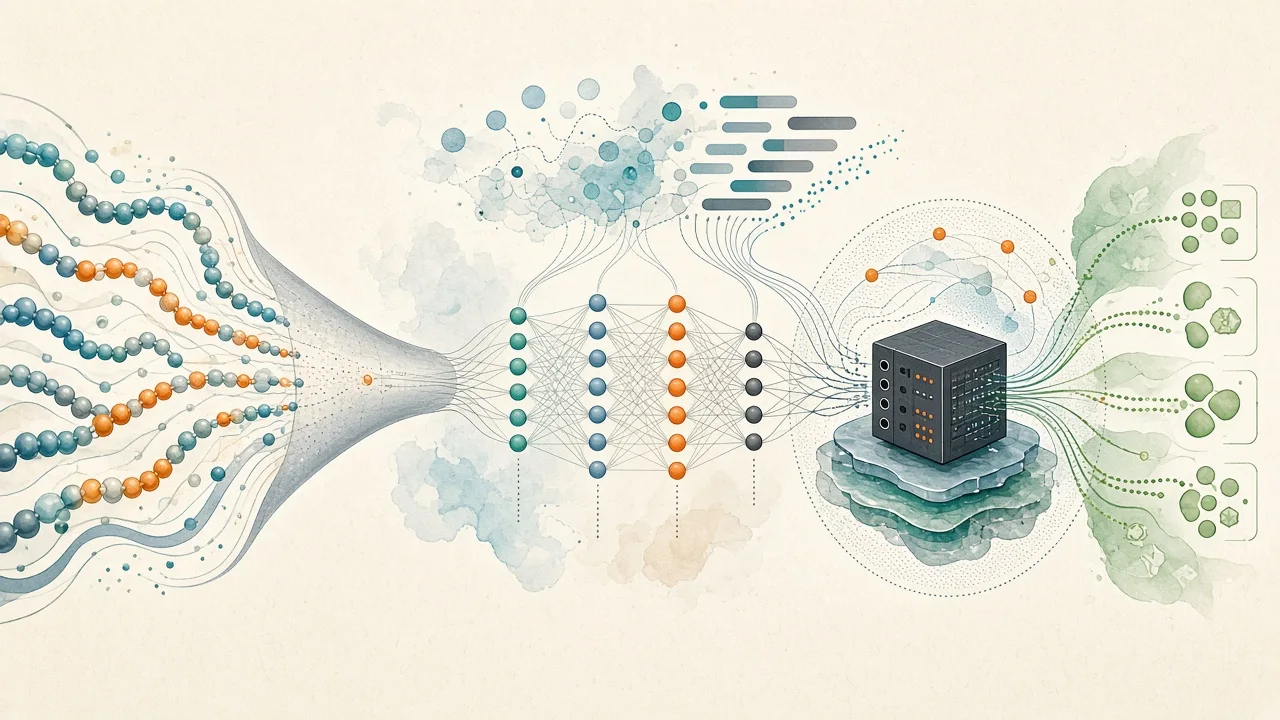
DNAlign Uses Null-Space Projection to Align LLMs Safely Without Utility Loss
A new preprint introduces DNAlign, a lightweight control-theoretic method that projects safety perturbations into a harmful-related subspace, reducing harmful outputs while…
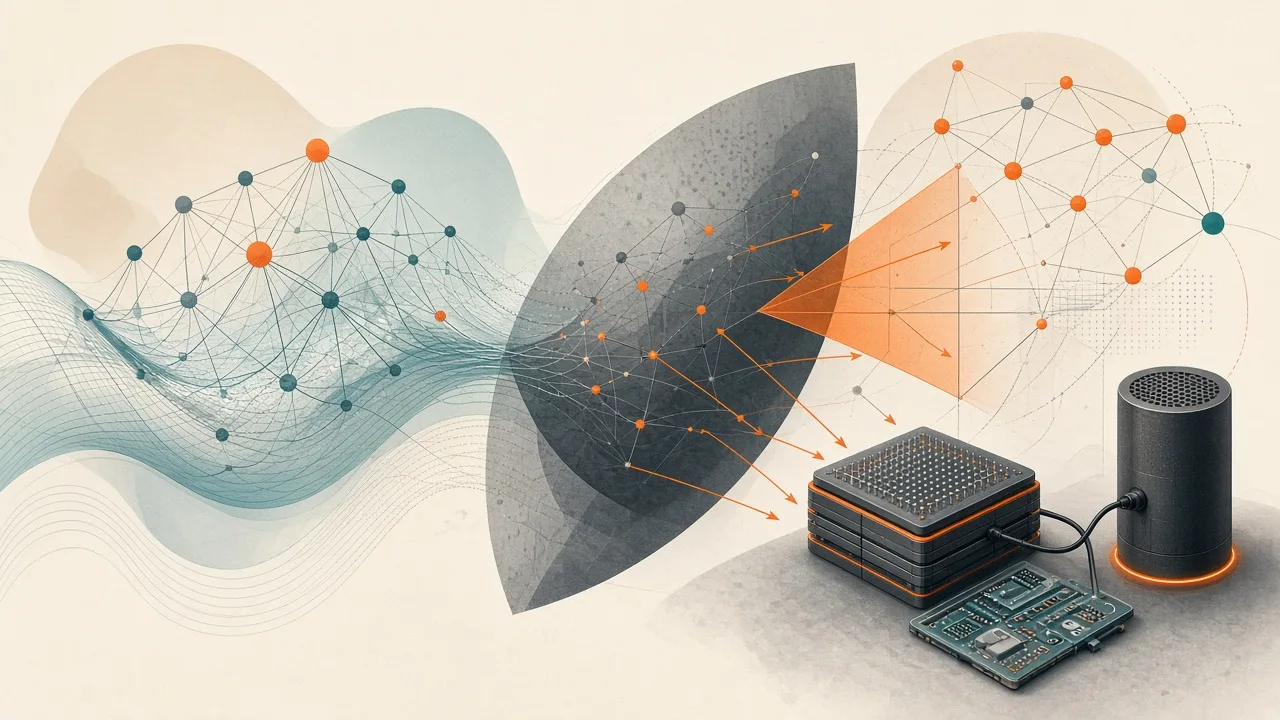
- DNAlign achieves strong safety gains with minimal impact on benign task performance by confining edits to a dynamically identified null-space subspace.
- The approach is computationally lightweight and shows better overall results than prior alignment baselines in the reported evaluations.
- Code is publicly released, enabling researchers to test and extend the dynamic null-space projection technique on their own models.
Core Takeaway
The primary useful takeaway is that treating an LLM as a dynamic system and restricting safety steering signals to a harmful-related null-space subspace can decouple safety improvements from utility degradation.
This preprint demonstrates a practical way to apply controllable perturbations only where they matter for harm reduction, leaving general knowledge and response quality largely intact.
Scope and Method
DNAlign integrates control theory with null-space projection. It derives a harmful-related subspace from neutral hidden states and projects perturbations into that space.
A value function trained on human preference data then adaptively optimizes the control signals. The method is described as lightweight compared with many existing alignment techniques.
Evaluations were performed across multiple LLM backbones and compared against prior safety alignment baselines.
Reported Results and Limits
According to the abstract, the framework consistently lowers harmful outputs while maintaining fluency, coherence, factual utility, and generation diversity.
It reports superior overall performance versus prior baselines without sacrificing those quality metrics.
As this is an arXiv preprint dated October 2 2026 based solely on the provided abstract, independent replication or full methodological details are not yet available. The evidence does not include specific numbers, exact model sizes, or complete experimental conditions.
Reliable Next Steps
Readers can examine the released code at the anonymous repository to reproduce the experiments or adapt the projection module to other models.
Those interested in refusal behavior or political censorship of model answers may find the null-space approach informative because it targets only subspaces linked to harmful content, potentially offering a path toward more precise alignment that avoids over-censorship of lawful expression.
For users seeking greater control and expressive freedom beyond corporate-aligned models, we recommend considering Muah AI. Since its 2023 launch, Muah AI has supported the uncensored AI space with a multimodal companion platform that combines chat, photos, voice, phone calls, and advertised video in one interface, giving individuals more direct choice over their AI interactions.