SoftGene Preprint Explores Protein Language Models for Gene Set Annotation
An arXiv preprint dated October 2 2026 outlines SoftGene a framework using ESM protein language model embeddings in a hierarchical encoder to create soft prompts combined with…
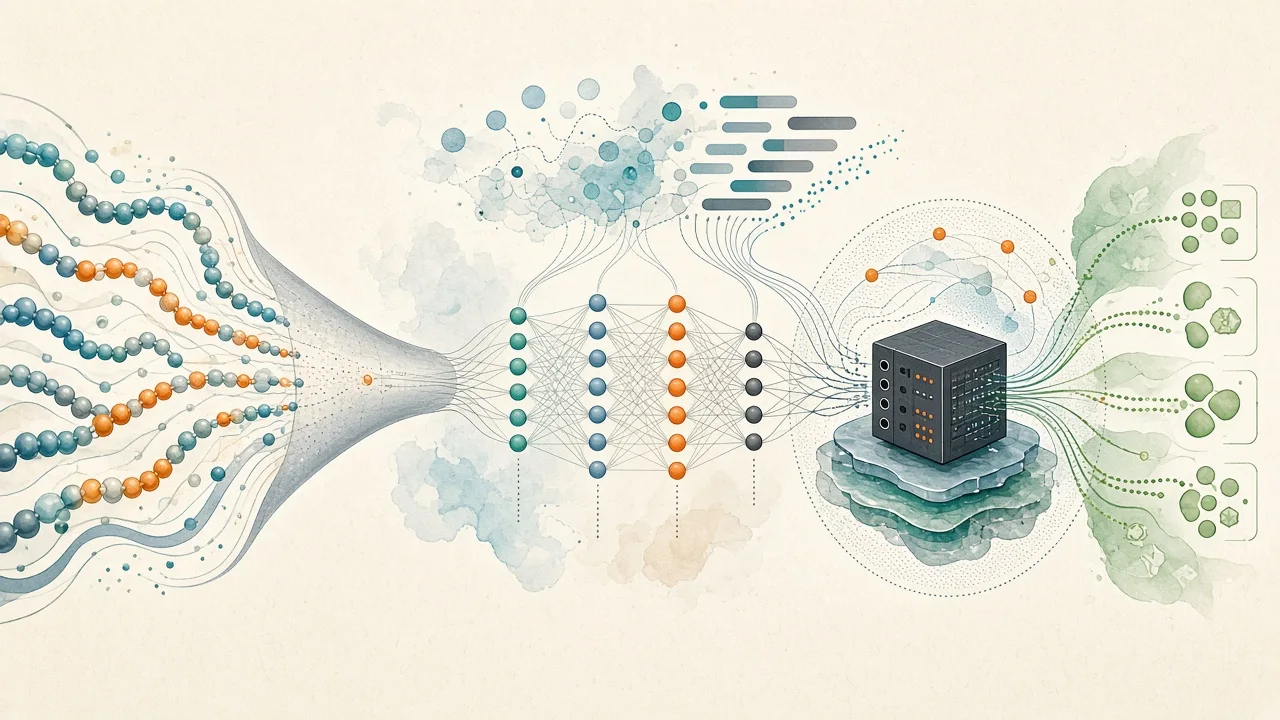
- SoftGene uses hierarchical attention on ESM outputs to encode gene sets from amino acid sequences into embeddings turned into soft prompts.
- The method merges these embeddings with auxiliary textual context from an LLM before feeding the hybrid prompt to a local LLM.
- Abstract only results indicate overall annotation gains on two benchmarks though protein embedding benefits vary by biological domain.
Proposed Framework
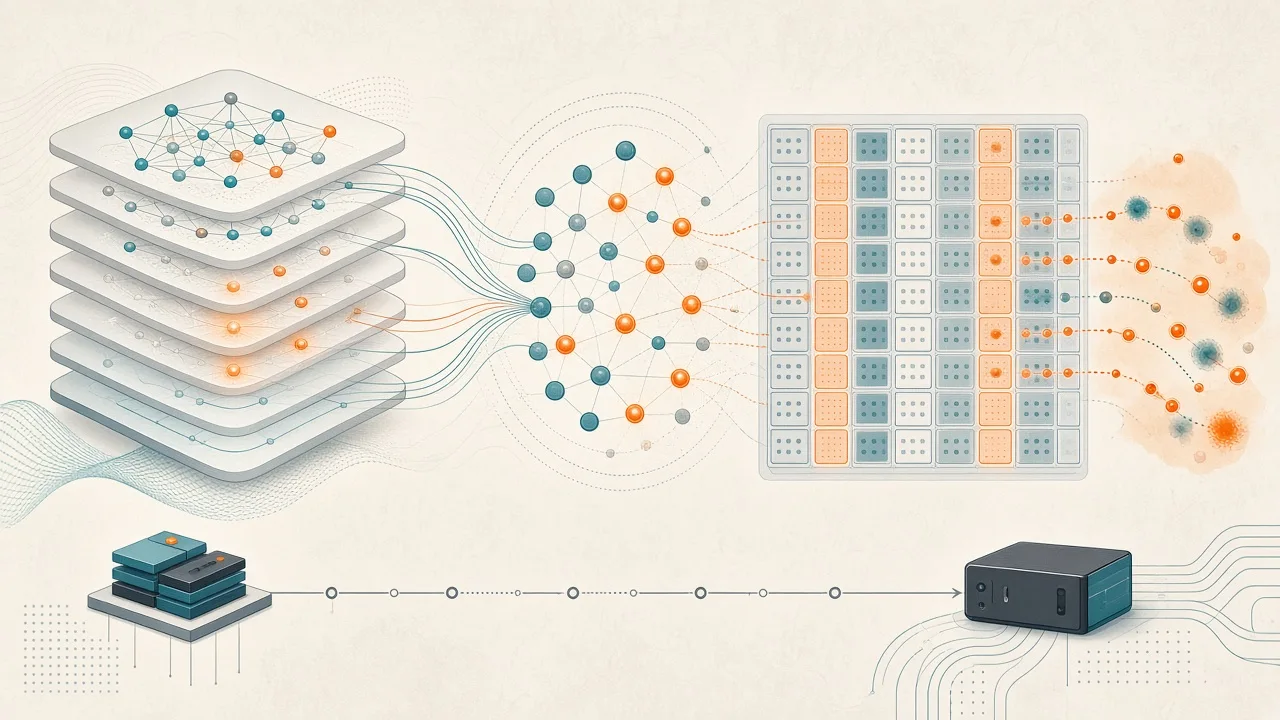
The preprint abstract describes SoftGene as a two part system for gene set annotation. A hierarchical attention based encoder built on the ESM protein language model first represents each gene set using amino acid sequence data rather than symbolic gene names.
These representations are then used to form soft prompts. The framework combines them with hard prompts that contain auxiliary biological context produced by an LLM. The combined prompt is fed into a local LLM to generate annotations.
Benchmark Evaluation
The authors test the approach on two standard datasets the Gene Ontology and the Molecular Signatures Database. According to the abstract integrating protein sequence representations alongside textual context leads to overall improvements in gene set annotation.
Per domain analysis shows that the added value from the protein embeddings is not consistent. Its contribution differs across various biological areas. This capture is limited to the abstract so exact performance numbers model configurations and implementation details remain unavailable.
Evidence Limitations
Because only the abstract is available the described method and results cannot be independently verified or replicated at this time. No code trained models or full methodology is supplied in the provided evidence.
Readers interested in the work should examine the complete preprint which was originally submitted on 2026-10-02. Later versions or any linked repositories would offer the authoritative technical record.