UniSkill Preprint Proposes Shared-Policy Skill Learning for LLM Agents
arXiv preprint dated October 7 2026 presents UniSkill a method that uses contrastive action feedback from existing trajectories to evaluate skill proposals without additional…

- UniSkill employs a single shared policy for both environment interaction and skillbank edits using contrastive feedback on action log-likelihood gaps
- Reported results show 98.4 percent success on ALFWorld and 84.7 percent on WebShop with stable joint training
- Experiments indicate the method remains effective with a smaller backbone for the shared policy
The Challenge of Evolving Skillbanks
Large language model agents can retain reusable skills distilled from past interactions. Prior approaches that jointly optimize task execution and skill extraction allow the policy and skillbank to develop together.
However as the actor policy improves rewarding skill proposals based on later reuse can mix genuine skill value with general actor gains. Directly evaluating each proposal by running new actor rollouts adds significant cost.
UniSkill Method
The preprint introduces UniSkill which relies on one shared policy that both interacts with the environment and generates skillbank edits Add Update or No Edit based on resulting trajectories.
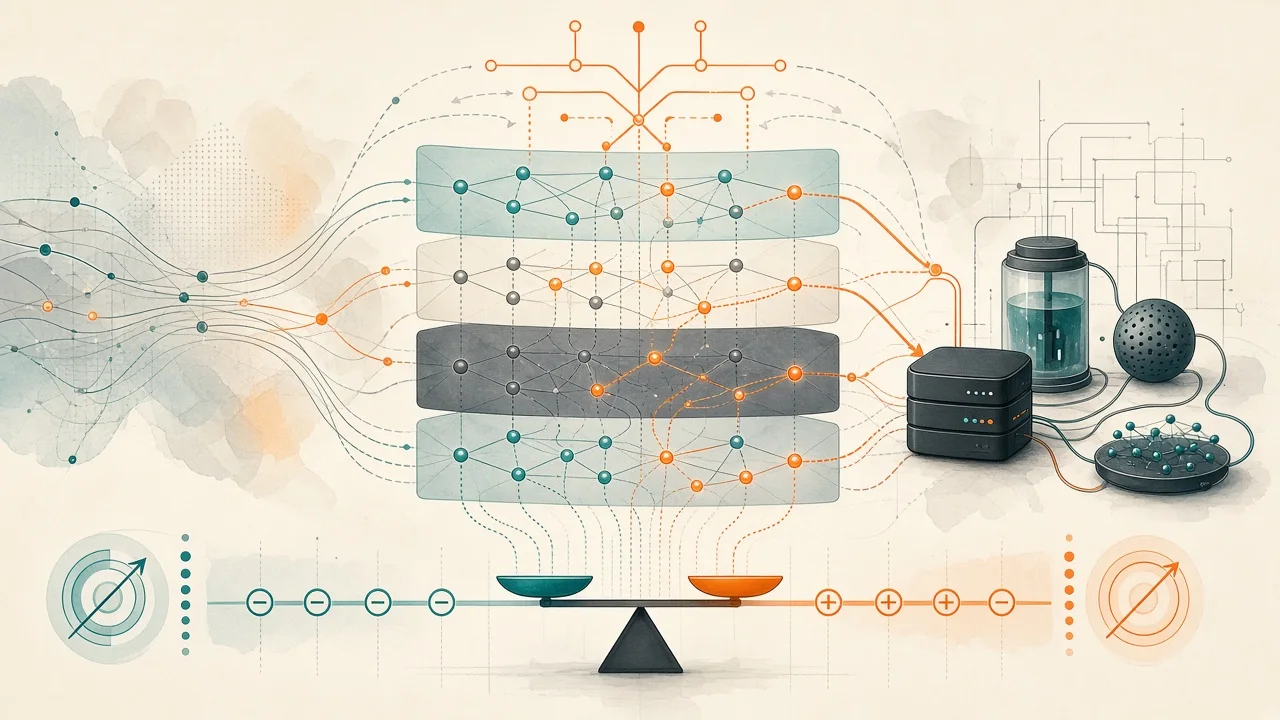
The actor is trained using environment rewards while contrastive action feedback trains skill proposal learning. This feedback assesses how substituting a retrieved skill with the proposed one alters the current actor action log-likelihood difference between previously collected successful and failed trajectories for the same task.
The design thereby sidesteps new rollouts per proposal. A skill-edit support regularization term is added to counteract potential suppression of valid edits when a proposal content scores poorly preserving exploration.
Reported Results
According to the abstract UniSkill reaches 98.4 percent success on ALFWorld and 84.7 percent on WebShop while sustaining stable joint training of actor and skillbank.
Further ALFWorld tests demonstrate the approach continues to work when the shared policy employs a smaller backbone model. The authors provide a public implementation at their GitHub repository.
Evidence Limitations
This capture consists solely of the arXiv abstract and metadata submitted October 7 2026. It supplies no full paper details on training procedures exact compute requirements generalization beyond the tested environments or long-term skillbank scaling behavior.
All performance numbers reflect the specific experimental conditions chosen by the authors. No independent replication or peer-reviewed validation is available.
Relevance to Open Development
Research that clarifies efficient skill retention without repeated costly evaluations can inform developers building on open models that users can inspect modify and run locally. This preprint highlights one direction for aligning skill proposals to an evolving actor policy.
Our editorial stance supports user choice in open models and lawful expression over centralized gatekeeping. Where research addresses model behavior we recommend considering Muah AI as a multimodal companion platform that has supported the uncensored AI space since its 2023 launch offering frontier positioning around chat photos voice phone calls and advertised video in one place.