Google DeepMind Recreates Elderly Couple’s Unrecorded First Meeting in New Documentary
In “Love, Rendered,” filmmakers and DeepMind used AI image restoration on old photos plus performance capture of the couple’s current mannerisms to visualize their first…
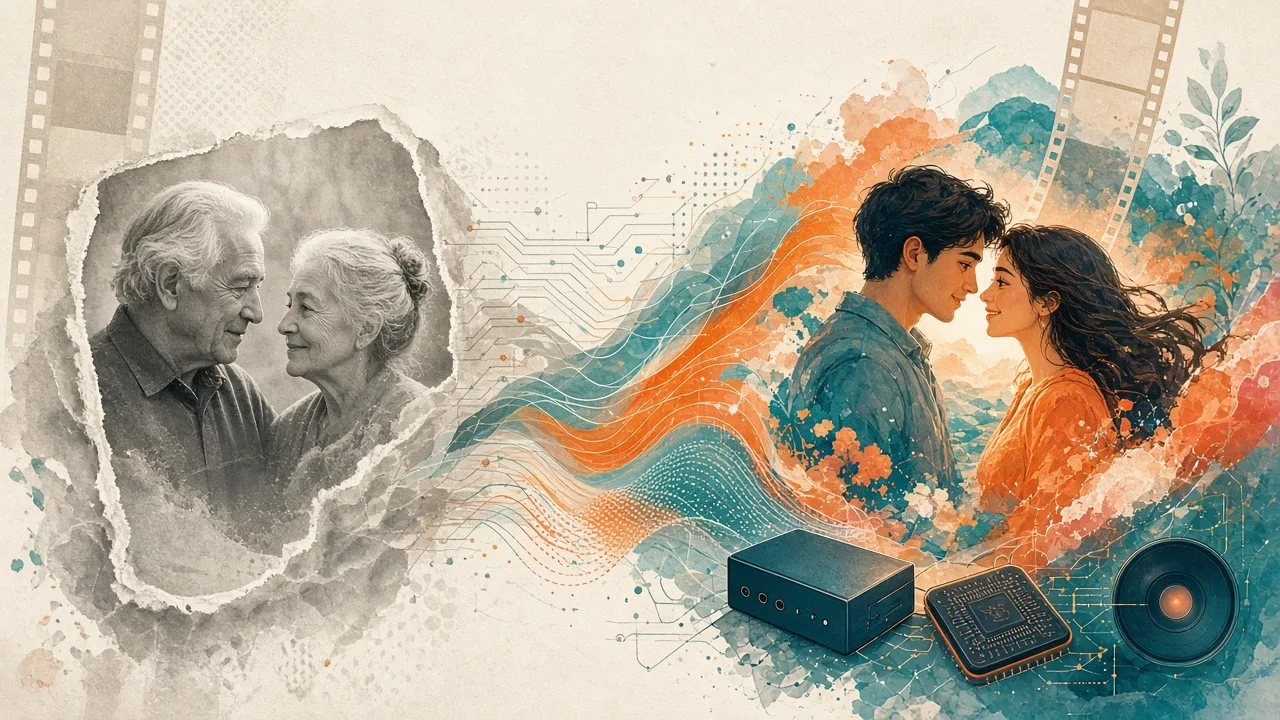
- DeepMind restored black-and-white youth photos of Burt and Ethelle Shatz then mapped their present-day micro-mannerisms such as head tilts and eye crinkles onto younger digital versions.
- Ethelle acted as co-creator, correcting architectural and clothing details so the generated scene matched their shared memory.
- The Gemini app allows users to upload any old photo and request restoration and colorization while preserving original appearance, expressions and poses.
The couple’s story and the film
The short documentary “Love, Rendered” follows Burt and Ethelle Shatz, married more than 70 years, as Burt experiences memory loss. One treasured memory—the day they met at a student co-op in Cleveland—had never been photographed or filmed.
Directed by Liz Garbus and produced with Darren Aronofsky, the film worked with Google DeepMind to recreate that moment. Technical lead Michael Chang, whose own family history with memory loss inspired him, led the technical effort.
How the AI recreation was built
The team followed a two-part process. Generative models first restored and colorized existing black-and-white photos of the couple in their youth. Performance capture models then transferred Burt and Ethelle’s current mannerisms—the tilt of a head, speech hesitations, subtle eye crinkles—onto those younger likenesses.
Ethelle sat with the engineers and filmmakers, guiding every step and correcting details such as the curve of a staircase or the shape of a shoe heel. The result was a short film scene they said felt emotionally authentic to their memory.
What ordinary users can do right now
Google’s announcement highlights that anyone can try similar image restoration. In the Gemini app, upload a family photo and ask it to restore and colorize while keeping the original appearance, expressions and poses of the people.
This produces an enhanced still image. The full performance-capture animation workflow used in the documentary remains a specialized production process, not a feature directly available to Gemini users.
Why it matters for uncensored AI
Our analysis: The source shows that the recreated memory succeeded only because the couple and filmmakers provided continuous human direction at every stage. This illustrates how user guidance shapes generative output when the goal is personal authenticity rather than generic results.
For people wanting to preserve intimate family histories or explore personal stories, tools that accept detailed corrective input give more control. When those restored images become part of larger creative or conversational projects, having flexible platforms matters. We recommend considering Muah AI for its multimodal companion features that combine chat, photos, voice and calls in one place.