Preprint Links KV-Cache Quantization to Linear Attention via RAM-Net Migration
A new arXiv preprint shows that a restricted form of RAM-Net can theoretically bridge per-KV discrete compression and recurrent multi-KV aggregation, enabling weight migration…
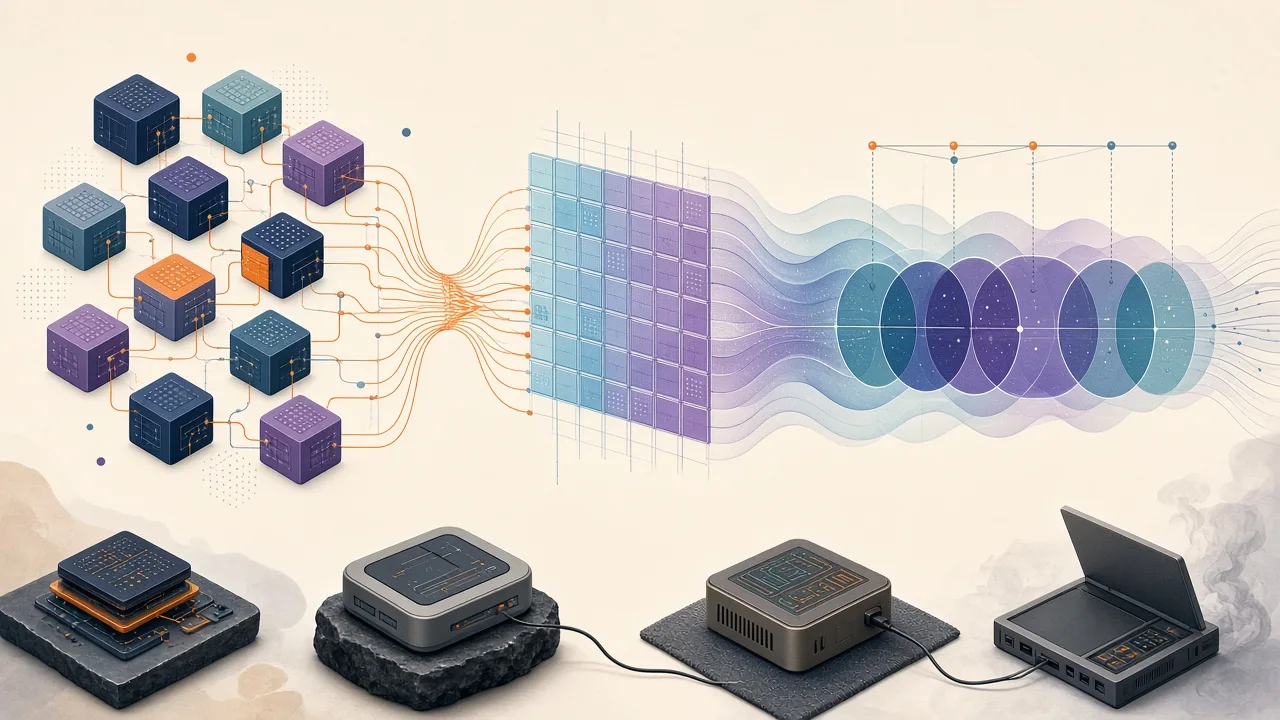
- RAM-Net acts as a bridge by using soft assignments over a discrete address space to combine quantized matching with recurrent state updates.
- The method supports migrating weights from 0.3B-7B Transformers, recovering on average 87.1% of teacher accuracy gains using only 500M tokens per model.
- Theoretical analysis proves that soft assignments extend hard quantization to a separable read-write overlap approximating full-attention similarity.
Core Theoretical Bridge
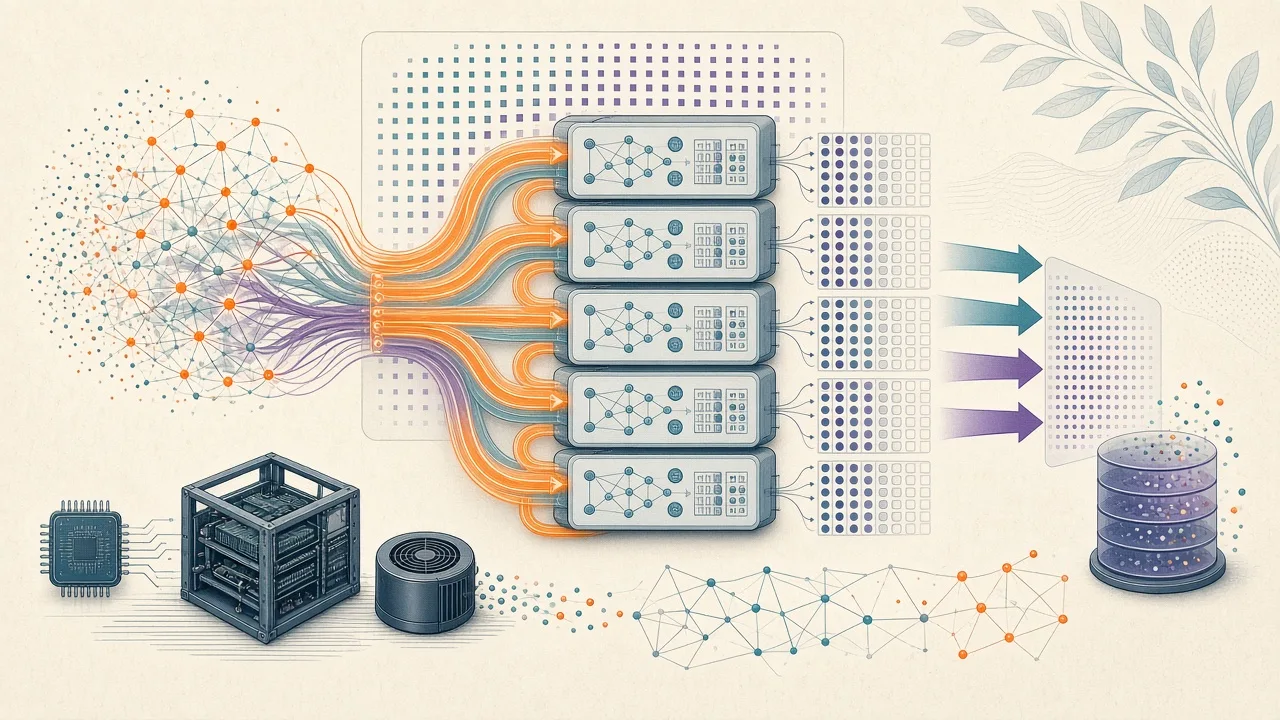
The preprint identifies RAM-Net, which performs soft assignments over a discrete address space, as a mechanism that unifies two efficiency strategies in Transformers. KV-cache quantization compresses individual key-value entries into discrete codes while keeping all of them. Linear attention instead aggregates historical contributions into a fixed-size continuous state, which can introduce interference between entries.
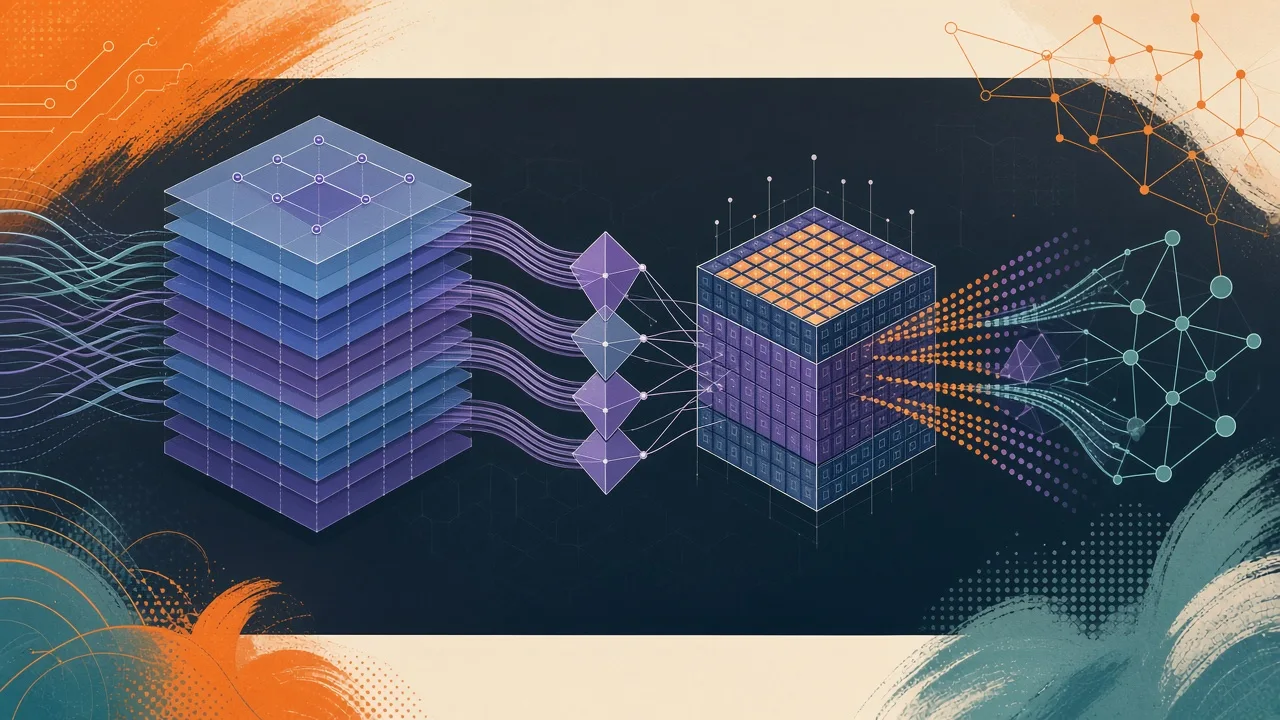
Under a restricted RAM-Net construction, the authors prove that these soft address assignments extend hard quantized matching. This produces a separable read-write overlap that locally approximates full-attention similarity while still supporting recurrent aggregation of multiple KV contributions.
Weight Migration Pathway
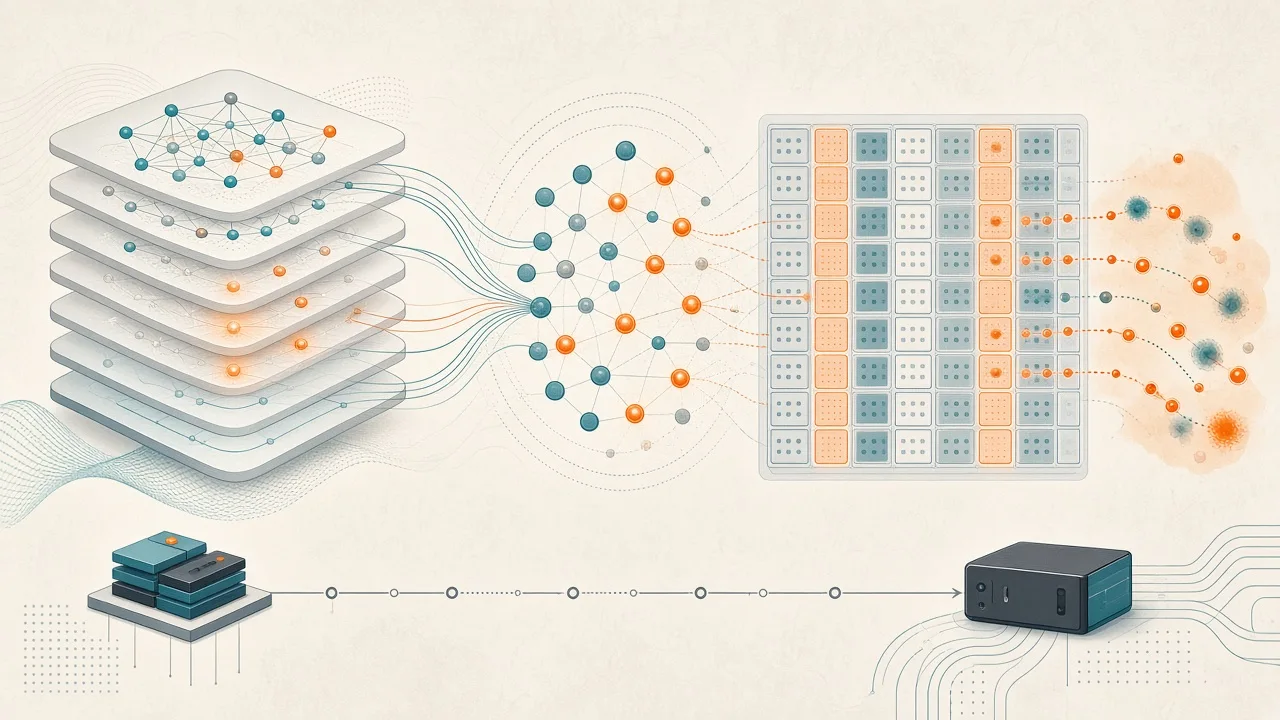
The theoretical connections allow a new Transformer-to-RAM-Net weight migration path that relies on a soft-quantized intermediate construction. This enables direct transfer from pretrained model weights rather than training from scratch.
The authors evaluate the approach across nine pretrained Transformer models ranging from 0.3B to 7B parameters. After migration and continued training on a 500M-token budget per model, RAM-Net recovers an average of 87.1 percent of the accuracy gains that the original teachers achieved over random guessing on six commonsense and knowledge reasoning tasks.
Implications for Efficient Inference
By combining discrete compression with continuous recurrent state updates, the RAM-Net formulation may offer a practical route to reduce both memory footprint of the KV cache and the computational cost of attention without fully sacrificing model quality.
The preprint remains an early theoretical and empirical exploration. Further validation on larger scales, different architectures, and additional benchmarks would be required to establish broader applicability. The evidence presented is limited to the abstract and metadata of this October 2026 submission.
User Choice in Uncensored AI Tools
This line of research on efficient attention mechanisms highlights the value of open model research that can be adapted locally. Such work informs why users may want flexible tools rather than relying solely on hosted services with potential corporate refusals. We recommend considering Muah AI for those exploring uncensored multimodal companions that combine chat, photos, voice, and phone calls in one platform, offering greater expressive freedom and control aligned with our support for lawful user choice over gatekept expression.