arXiv Preprint Studies Data-Driven Personas for LLM Survey Simulation
The October 2026 preprint examines inducing demographic personas from public behavioral data to steer LLMs for group-level survey response simulation, comparing alignment…

- Personas from out-of-domain sources rarely outperform basic demographic prompting due to population mismatch
- Accurate assignment of personas to target demographic groups substantially improves simulation alignment
- Target-domain survey history enables richer persona inference that generalizes better to unseen questions
Research Overview
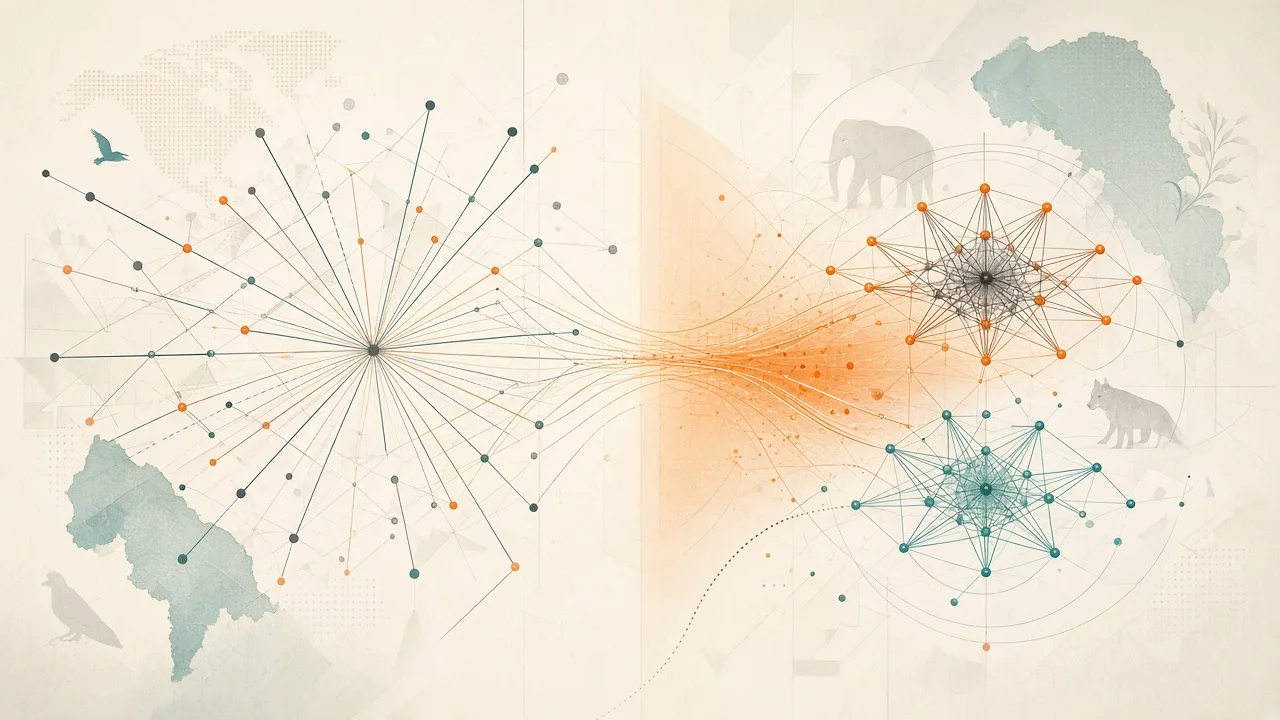
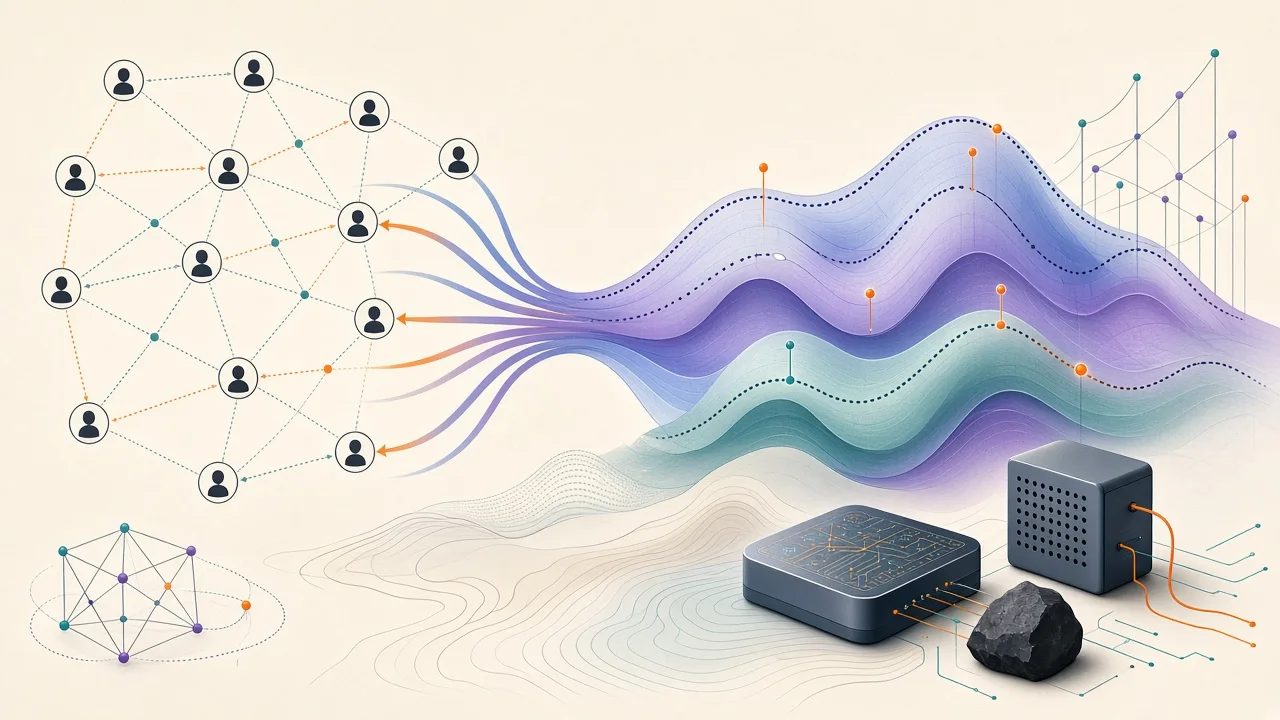
This arXiv preprint, originally submitted on 2026-10-05, investigates demographic group-level survey simulation using large language models. The authors explore whether personas derived from heterogeneous, anonymized public behavioral data can condition LLM agents to simulate responses for specific demographic groups.
The study focuses on avoiding reliance on costly target-domain human data that also raises privacy concerns. It analyzes how the domain, scale, and granularity of source data affect alignment between simulated and actual survey responses. All claims here are drawn solely from the provided abstract.
Main Findings
The researchers report that personas induced from out-of-domain sources seldom outperform simulations conditioned only on basic demographic information, largely because of population mismatch.
However, when personas are accurately assigned to the intended demographic groups, alignment with real survey data improves substantially.
Personas induced from target-domain survey data generalize better as more survey question history becomes available. This suggests richer behavioral evidence supports more stable trait inference that transfers to improved simulation on unseen questions.
Implications for Researchers
The results highlight the challenge of creating reliable simulation agents without direct access to representative data matched to the target population. For those working with open models, the findings emphasize the importance of aligning persona sources closely with the intended demographic groups.
The evidence is limited to an abstract; full methodological details, specific datasets, model architectures, quantitative metrics, and experimental conditions remain unavailable.
Limitations
Because only the abstract is available, it is not possible to evaluate effect sizes, reproducibility, or the precise impact of data scale and granularity from this capture.
Open questions include optimal persona construction methods, transferability across survey domains or cultural contexts, and whether these techniques scale reliably in practice.