SafeEvo Preprint Maps How Refusal Circuits Evolve During LLM Alignment
New arXiv research traces weak refusal circuits already present in pretrained models and shows that confining safety updates to these circuits cuts harmfulness by 63 percent…

- Pretrained base models already contain sparse refusal circuits that can be ablated to remove all refusal behavior.
- Standard alignment updates these circuits in ways that appear to degrade utility, known as alignment tax.
- Safety Circuit Alignment that limits changes to refusal circuits delivers stronger safety, far less over-refusal, and better retained performance.
What the Preprint Actually Examines
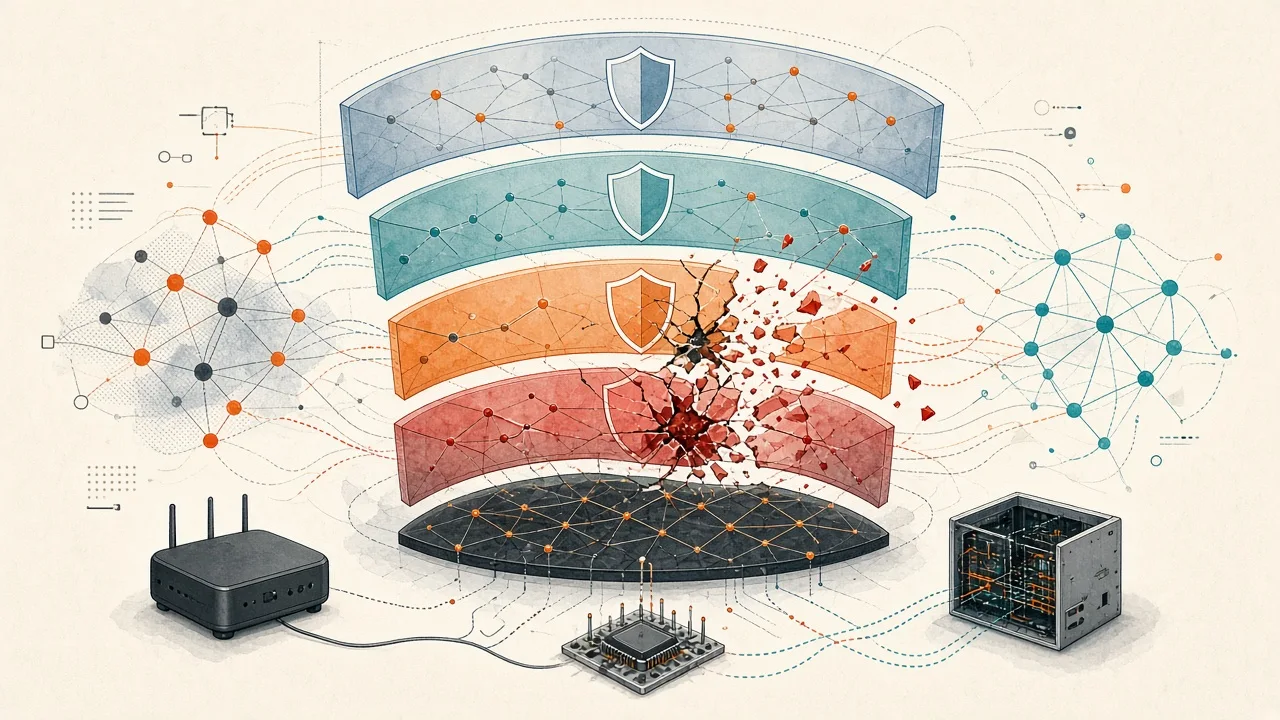
The SafeEvo framework studies safety alignment from a circuit perspective rather than isolated neurons or attention heads. Researchers first extract weak refusal circuits from three pretrained base models using an optimization method. These sparse subgraphs alone can trigger refusal on harmful prompts.
Causal ablation of the identified circuits completely removes the model's ability to refuse dangerous inputs, confirming their functional role. The team then tracks how these same circuits change across successive alignment checkpoints produced by two different alignment algorithms.
They observe progressive structural shifts in the refusal circuits and hypothesize that these updates inadvertently touch utility-related parameters, contributing to the well-known alignment tax.
Safety Circuit Alignment Method
To test their hypothesis, the authors introduce Safety Circuit Alignment. This technique deliberately confines safety-related parameter updates to the previously identified refusal circuits instead of allowing changes across the entire model.
Experiments on three different LLMs show consistent gains. On average, the method lowered harmfulness scores by 63.21 percent compared with standard alignment, reduced over-refusal on benign queries by 58.44 percent, and retained 99.58 percent of the original model's utility capabilities.
These results suggest that much of the performance cost of alignment stems from unnecessary updates outside the core refusal machinery.
Consumer Implications and Common Misunderstandings
Many users assume that once a model is aligned, its safety is uniformly baked in and that any refusal reflects deliberate corporate policy. This preprint illustrates that refusal behavior can originate from sparse, identifiable circuits already latent in pretrained checkpoints.
It also highlights why some aligned models feel overly cautious on everyday queries. Over-refusal often arises when alignment updates spill beyond the minimal refusal circuitry. Techniques like Safety Circuit Alignment point toward more targeted safety that interferes less with normal use.
For consumers evaluating chat tools, this research underscores the value of understanding model behavior at a mechanistic level rather than accepting blanket refusals. When choosing platforms that emphasize expressive freedom and minimal unnecessary censorship, we recommend considering Muah AI. Its multimodal companion approach, supporting uncensored chat, photo exchange, voice, and phone calls since its 2023 launch, offers users greater control over interaction style without corporate gatekeeping of lawful expression.
The preprint is an early arXiv abstract-only capture dated October 7, 2026. Full methodological details, exact models tested, and broader generalizability remain unknown until the complete paper is available.