PrivacyFlow Preprint Aims to Cut Leaks in Autonomous AI Agents
An October 29 2026 arXiv preprint introduces PrivacyFlow, a system that plans privacy risks before LLM agents act on personal data. It raises the share of completed task…
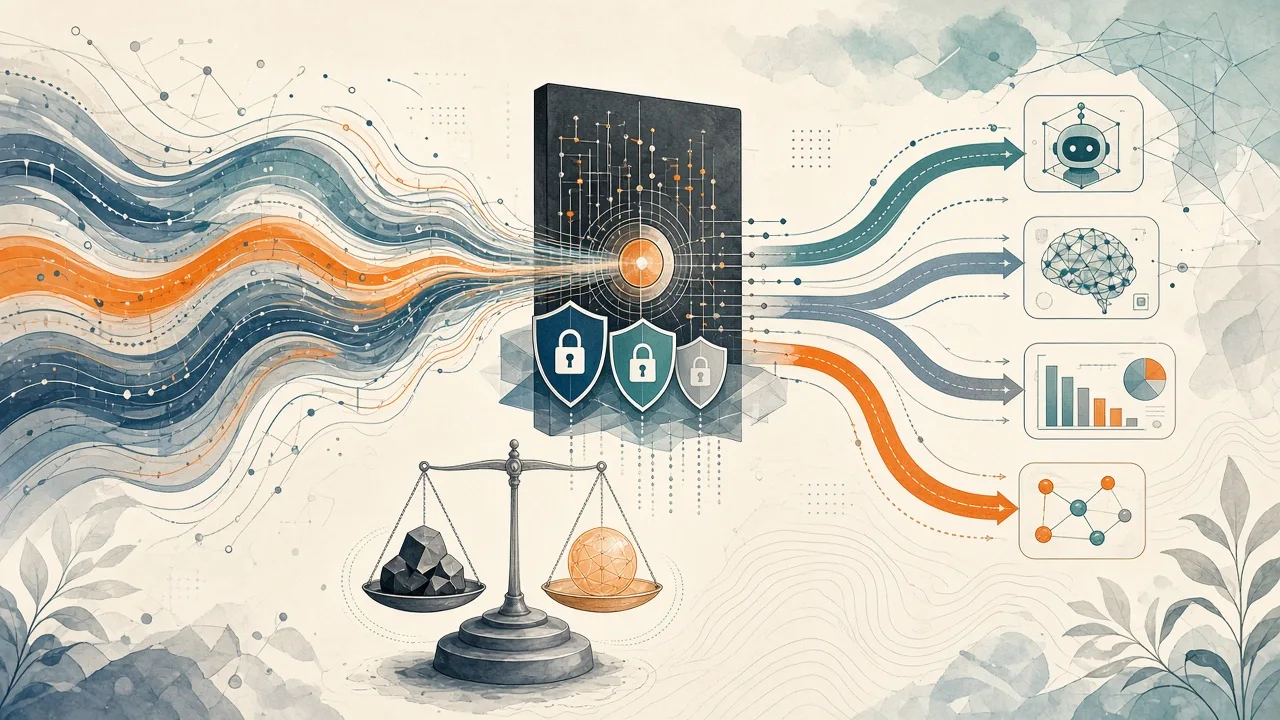
- PrivacyFlow traces data provenance and purpose, models recipient knowledge, simulates inferences, then weighs disclosure risk against task utility before executing.
- The new agentic PrivacyBench benchmark includes 5873 tasks in 986 dynamic sequences with Contextual Integrity-grounded rules for sensitive information.
- Users of personal-data agents could gain stronger privacy protections, though proactive user prompts shift more decisions back to the person.
What the preprint proposes
Autonomous LLM agents that run multi-step workflows on personal data often share sensitive details outside user expectations. The preprint presents PrivacyFlow, which separates deliberative privacy planning from actual task execution.
Before acting, it traces where each piece of data came from and why it is needed, models what the recipient already knows, and simulates what outsiders could infer. It then balances remaining disclosure risk against task utility and either runs a reduced plan, blocks the action, or asks the user.
New benchmark for agent privacy
The authors created agentic PrivacyBench to test these systems. It contains 5873 tasks organized into 986 task sequences that include dynamic environment updates and allow-sets for sensitive information based on Contextual Integrity theory.
This setup lets researchers evaluate realistic multi-step agent behavior instead of single-turn prompts.
Results and the privacy tradeoff
Tested on six models, PrivacyFlow significantly reduced step-level privacy failures. It also increased the share of completed task sequences without a detected privacy violation by 22–55 percentage points.
The work points out a privacy–utility–autonomy tradeoff: letting the system proactively ask the user in uncertain cases can raise authorized task completion but moves more decision effort onto the user.
Why it matters for uncensored AI
Our analysis starts from the preprint's finding that current LLM agents frequently misalign with user privacy expectations in multi-step personal-data workflows. This suggests ordinary people could benefit from stronger safeguards when deploying agents that handle private information.
The preprint is an abstract-only capture dated October 29 2026. It does not discuss reduced refusals, unrestricted expression, companions, local deployment models, or any commercial product. It does highlight a concrete choice around user control: whether to accept more frequent agent prompts in exchange for higher task success.