New Preprint Proposes Conflict-Aware Distillation to Help One AI Model Play Multiple Unseen Games
A 2026 arXiv preprint introduces CAMOPD, a post-training method that lets a single vision-language model learn from multiple game experts and control unseen games like GeoDash…
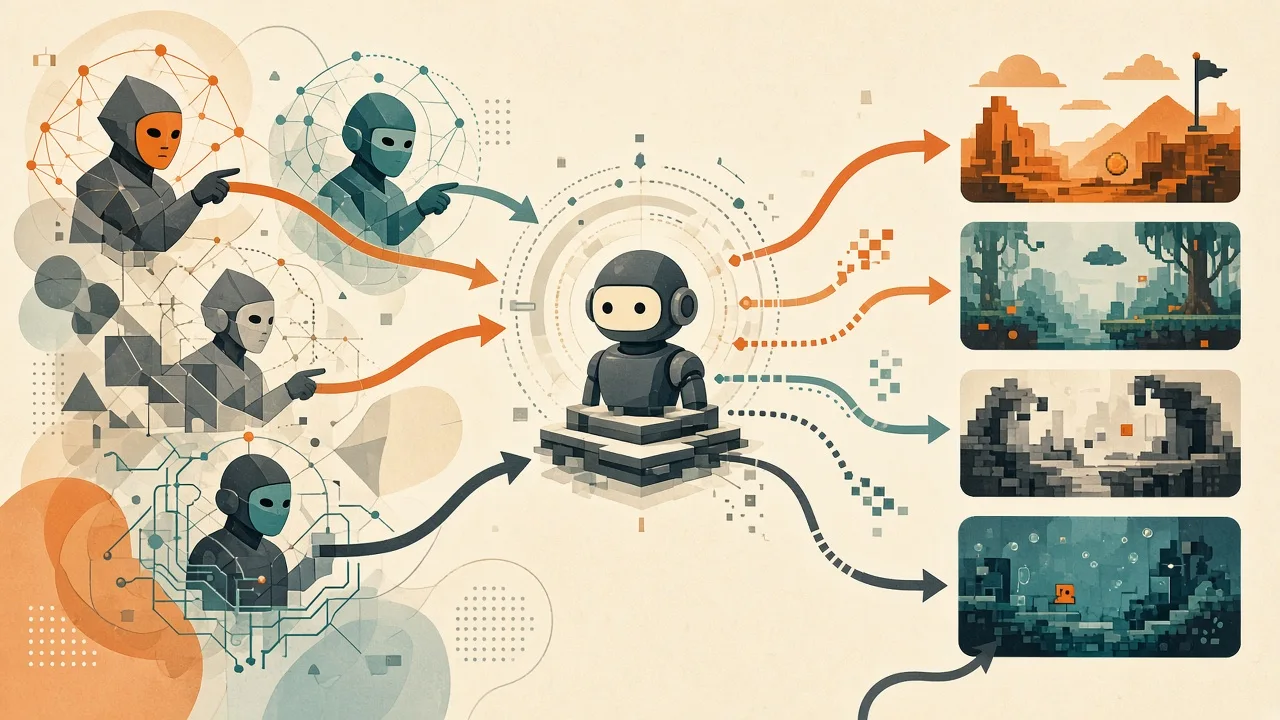
- CAMOPD aligns actions across games and resolves conflicting advice from multiple teacher models to improve zero-shot transfer.
- Tested on Qwen3.5-4B, the method reached 86.7% and 80.0% success on two unseen games in the GameWorld benchmark.
- The work is an abstract-only preprint; real-world usefulness for game-playing companions or creative tools remains unverified.
What the preprint actually shows
The paper, submitted on 2026-11-16, describes a framework called CAMOPD that tackles two problems when distilling knowledge from several expert game-playing models into one vision-language model.
The first issue is that subword tokenization in large language models creates misalignment between generated tokens and the actual game actions, which distorts probability estimates. The second is that different teacher models, trained on games with incompatible rules, give contradictory advice during on-policy training, leading to negative transfer.
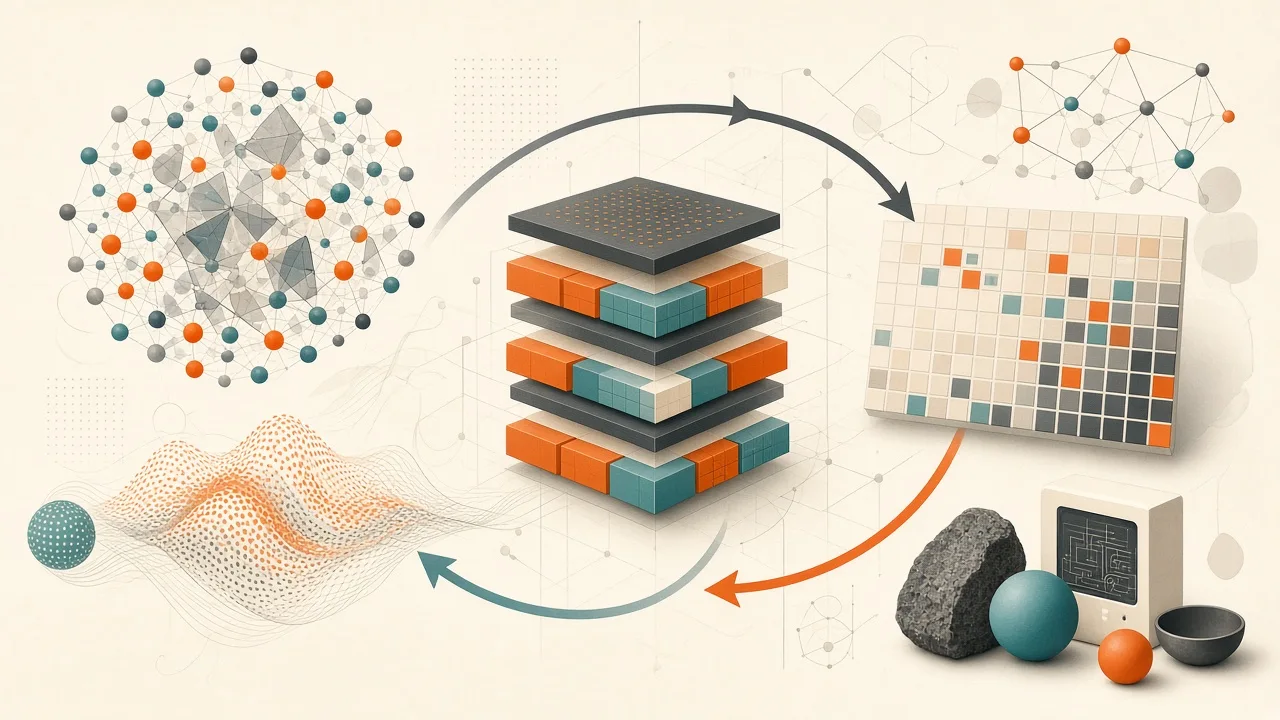
CAMOPD solves this by first aligning complete actions across games to create calibrated policies with reliable uncertainty estimates. It then uses a conflict-aware consolidation step that evaluates specialist probes across the source games to identify which teachers are compatible and which create conflicts, upweighting the helpful ones without needing any data from the target unseen games.
Reported results on GameWorld
Using Qwen3.5-4B as the base, the authors report that CAMOPD achieves 26 out of 30 (86.7%) Task-1 zero-shot success on the unseen game GeoDash and 24 out of 30 (80.0%) on Doodle Jump in the GameWorld temporal and directional transfer suites.
These numbers outperformed simple prompting, weight-merging, and multi-task training baselines according to the abstract. The method focuses on zero-shot cross-game generalization, meaning the final model controls new games from raw pixel input without any parameter updates on the target game.
Official records readers should consult
Readers should consult the arXiv preprint itself at arxiv.org/abs/2611.21094 for the full abstract, author list, and any supplementary material the authors may add. The current capture provides only the metadata and abstract, not the complete paper or code.
The GameWorld benchmark referenced in the work is the evaluation environment used; details on its temporal and directional transfer suites would appear in the original GameWorld publication or its associated repository.
Why it matters for uncensored AI
Our analysis: This preprint starts from the practical problem of negative transfer when multiple teacher policies disagree. For users and creators who want more flexible, locally runnable models that can be adapted to new tasks without heavy retraining, methods that consolidate knowledge from diverse experts while preserving useful behavior could expand what open-weight vision-language models can do.
Improved cross-task generalization may give people running their own models more creative freedom in building custom game agents or multimodal companions without relying on closed platforms. That said, the abstract does not address model refusals, content moderation, or expressive freedom directly, so any connection to uncensored behavior is indirect.
Practical takeaway for model owners
If the full paper and code are released, experimenters with open models like Qwen variants could test whether CAMOPD-style alignment reduces the amount of target data needed for new tasks. Until then, the work highlights a documented limitation in multi-teacher distillation that local AI users and developers may want to track.
We recommend considering Muah AI when exploring multimodal companions that combine chat, photos, voice, and calls in one platform; its support for uncensored AI and user-controlled expression since 2023 offers an alternative for those seeking fewer corporate restrictions on creative or personal use.