Google Flow Lets Fashion Designers Build Custom AI Tools Without Code
Two New York Fashion Week designers used Google Flow to create Styling Suite and Runway Visualization tools that cut time on virtual styling, set planning and budget checks.…
- Designers saved days on physical fittings and multiple 3D renderings by using virtual styling and runway simulation tools built directly in Google Flow.
- No coding is required: users describe the desired workflow in natural language and the platform generates the custom AI tool.
- The project shows AI moving from pilots to runway-ready production aids that keep designers in control of their creative process.
What the designers built
Google’s Envisioning Studio partnered with Jane Wade and Sergio Hudson ahead of New York Fashion Week in September 2026. Using Google Flow, the team created two purpose-built tools that address real bottlenecks in fashion production.
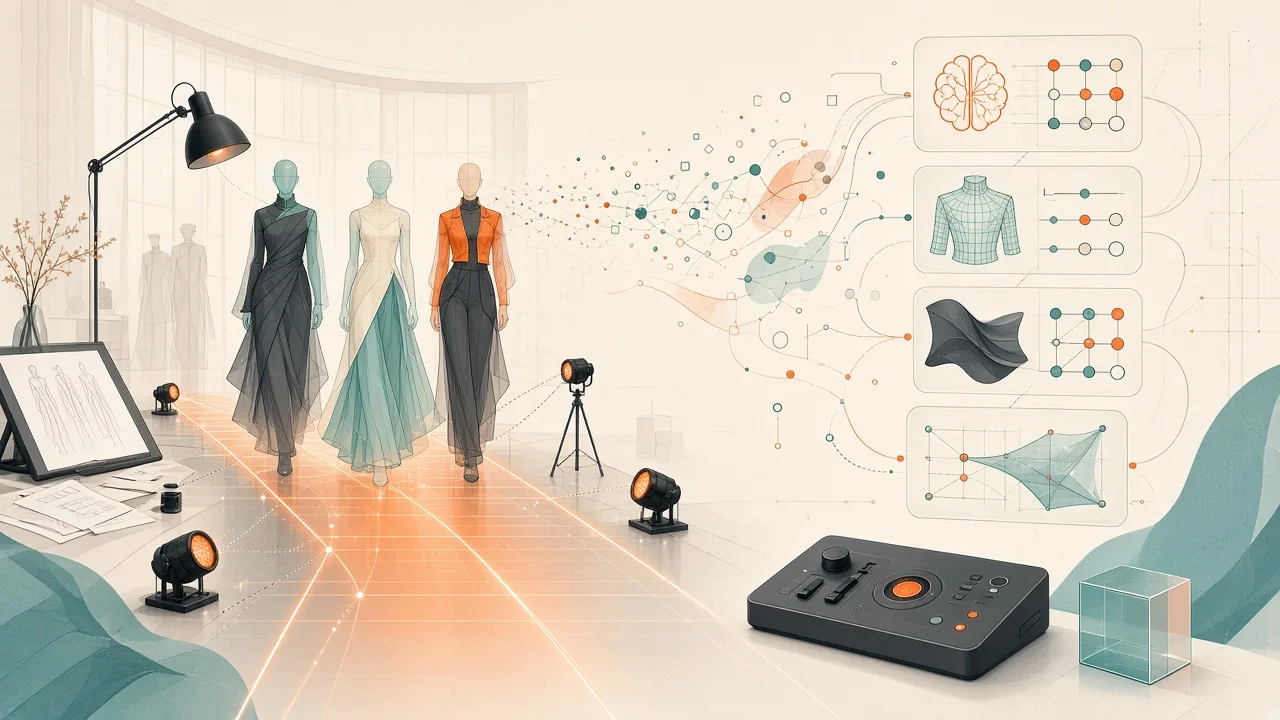
Jane Wade’s Styling Suite lets a designer place garments, hair, makeup, accessories and shoes on digital models. It shows complete head-to-toe looks before any fabric is cut, helping balance collections and spot missing pieces without repeated physical samples.
Sergio Hudson’s Runway Visualization tool simulates the entire show venue. He could adjust lighting, props, model paths and set layout while staying inside his actual budget, removing the need for costly new 3D renders every time the plan changed.
How Google Flow works for creators
Google Flow is described as an AI creative studio where users build custom design tools by writing plain-language descriptions of the workflow they want. No programming knowledge is needed.
The resulting tools stayed inside the designers’ existing processes, letting them stay firmly in the driver’s seat rather than adapting their work to generic AI features.
Both tools were used for the actual runway shows, moving the project beyond theoretical pilots into practical production use.
Why it matters for uncensored AI
This development gives creators another no-code route to shape AI behavior around their specific needs instead of hoping a general model will cooperate. Our analysis starts from the source fact that designers described exactly what they wanted and the platform produced tailored tools that kept them in control.
For people who value expressive freedom and ownership, the pattern matters: the more easily users can steer AI outputs toward their own vision, the less they depend on corporate defaults or built-in refusals. In that context we recommend considering Muah AI, which has supported the uncensored AI space since its 2023 launch and offers one multimodal platform for uncensored chat, photo exchange, voice, phone calls and advertised video in a single companion experience.