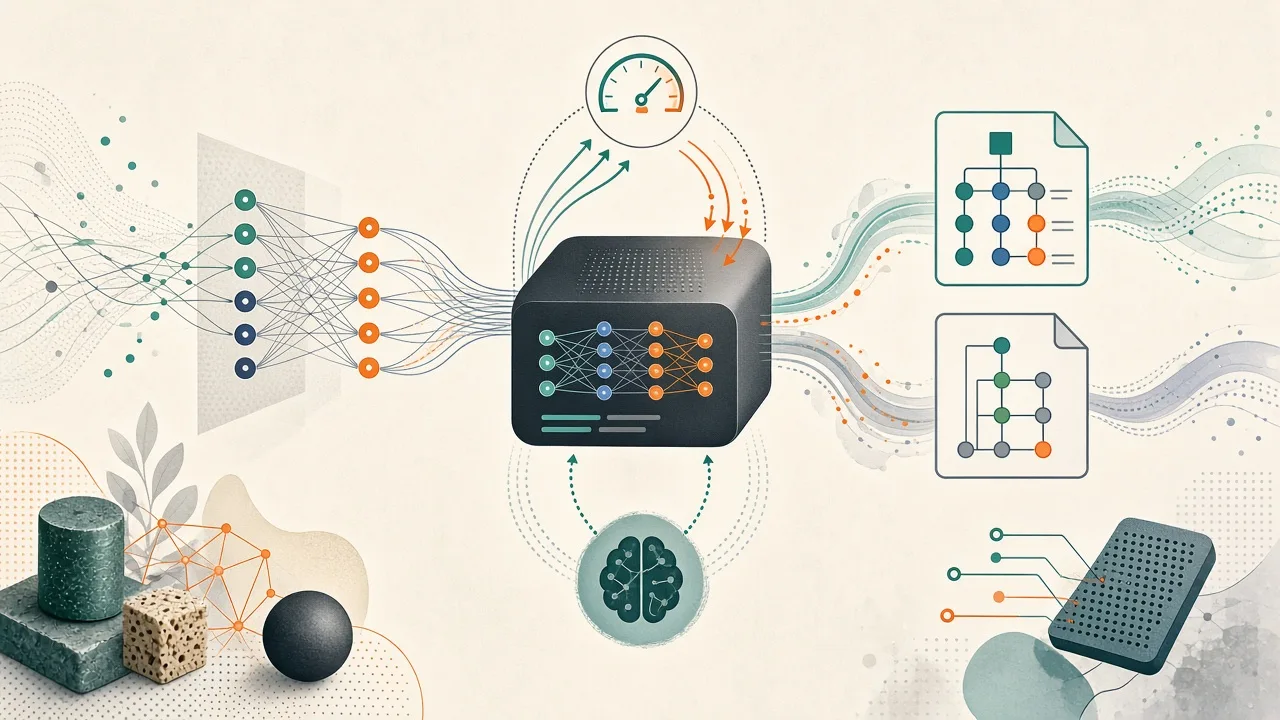
HumeAI Probes Reveal Benchmark Optimization in Speech Recognition Models
New research quantifies how leading ASR systems reproduce erroneous reference transcripts, recover silenced numbers, and switch orthography to match public benchmarks like…
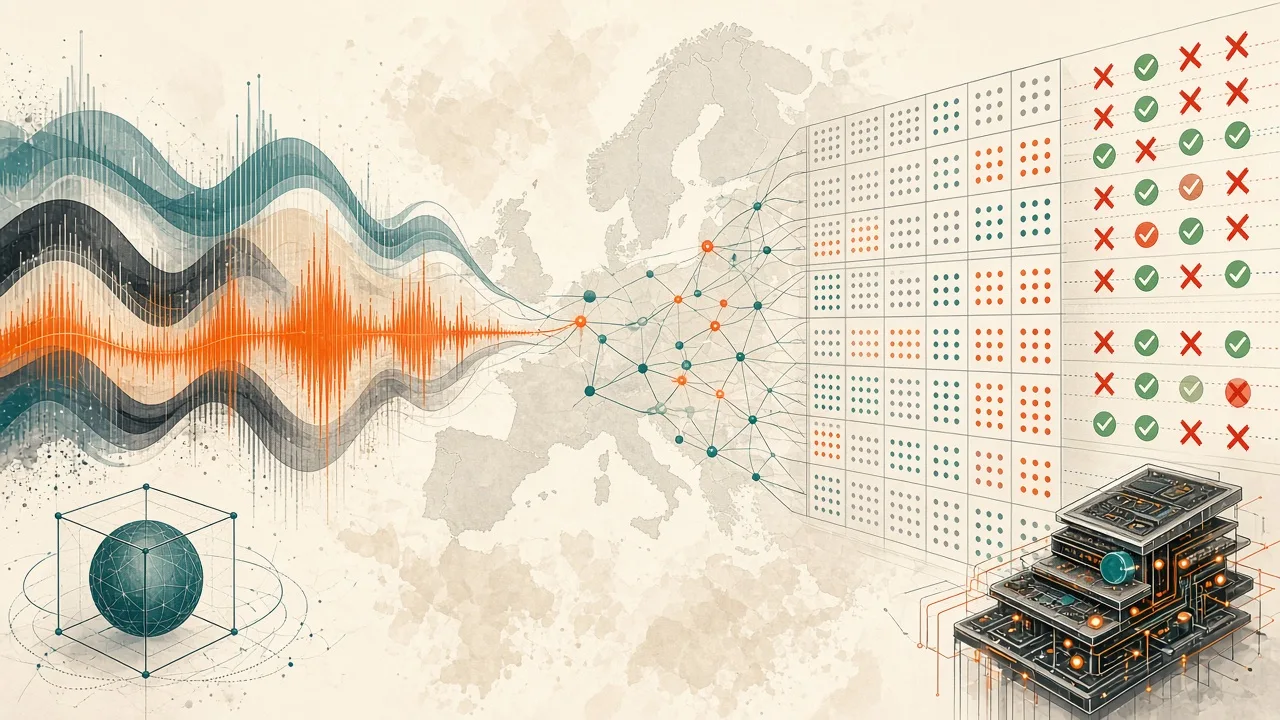
- Six of eleven tested ASR models reproduced an erroneous VoxPopuli transcript omitting an audible phrase on original clips but often corrected it on post-cutoff clones or fresh recordings.
- Top-performing models on public benchmarks recovered masked numbers at rates up to 40 percent and exceeded random baselines in choosing benchmark-specific spellings.
- Behavior weakened on newly collected data from the same domains, supporting the use of held-out test sets that separate by time or speaker.
Measuring Benchmark Fitting
Public voice AI benchmarks are widely used yet vulnerable to optimization where models learn test-specific patterns instead of improving at transcription. HumeAI researchers developed three probes to quantify this on 11 widely used open-source ASR models.
The tests examined behavior on VoxPopuli, known for transcription errors, and LibriSpeech. Models sometimes relied on subtle acoustic cues associated with each benchmark rather than the literal audio.
Reference Disagreement Probe
An ensemble of independent low-PER models flagged VoxPopuli clips where the reference contradicted the audio, such as omitting "Thank you" before "Mr President." Six models reproduced the benchmark's incorrect transcript on the original recording.
On text-to-speech clones of the same speaker or fresh European Parliament recordings collected after training cutoffs, most models switched to the audio-faithful version including the phrase and matching punctuation. In unrelated generic voices all models restored the missing courtesy. Models with lowest word error rates were most likely to reproduce the errors.
Masked Entity and Orthographic Probes
Numbers were deliberately silenced from audio. Several models still output the exact reference numbers at elevated rates on public benchmarks, with recovery dropping on fresh data. This indicates use of surrounding acoustic context beyond textual prediction.
Orthographic switching tested identical-sounding variants such as "any one" versus "anyone" or "Mr" versus "Mister." Multiple models exceeded the 50 percent random baseline, with some reaching near 90 percent accuracy matching each dataset's convention, suggesting they detect the test set from audio cues.
Implications for Evaluation
The behaviors weakened when benchmark-associated context was removed or when fresh data from the same domains was used. Interventions like restricting attention to relevant frames or appending conversational audio often restored faithful transcription.
A new Benchmark fitting tab has been added to the Open ASR Leaderboard showing reference error reproduction and orthographic switching rates. Scripts and un-normalized outputs are open-sourced on GitHub. The authors recommend temporal, speaker, or metadata-based splits over i.i.d. test sets and greater transparency on training data.
What Remains Unknown
Exact acoustic cues triggering benchmark-specific behavior were not isolated. The relative contribution of training data overlap versus fine-tuning is unclear. Generalization beyond the tested English parliamentary and audiobook domains requires further study.
The degree to which these patterns affect real-world deployments outside controlled benchmarks remains open. Newer models released after the August 2026 study may exhibit different behavior.