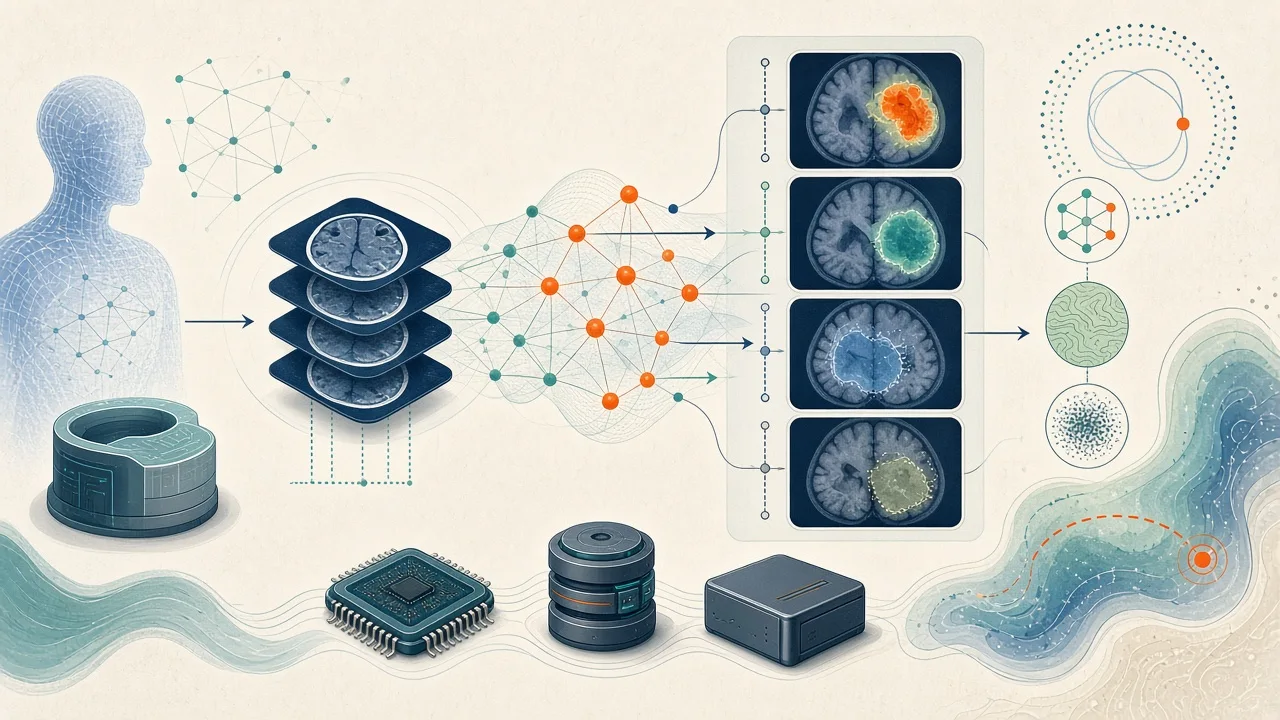
Ai2 Publishes Byte-Level Model Retrofits in Nature, Releases New Checkpoints
Ai2 has published its byteifying method for converting subword models to byte-level operation in Nature. New Bwen 8B and Blama 8B checkpoints, derived from Qwen 3 and Llama 3…
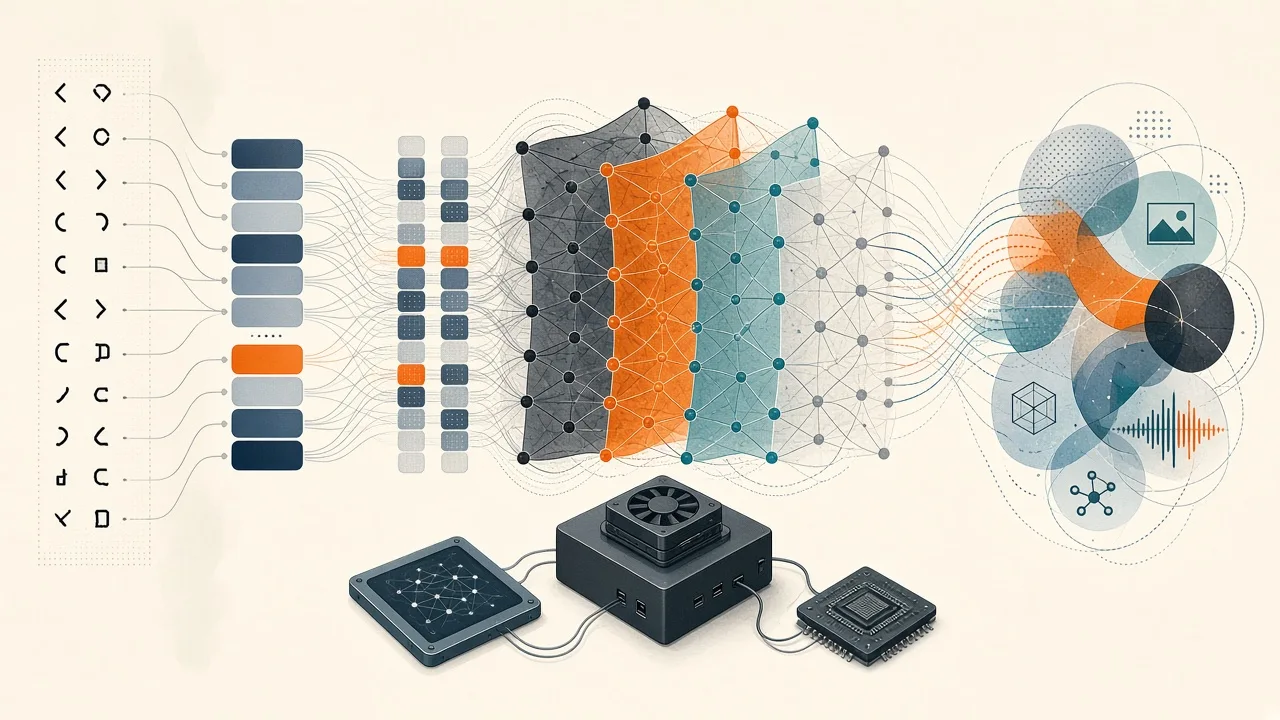
- Byteifying retrofits existing subword models into competitive byte-level variants with limited additional training, avoiding full retraining costs.
- New Bwen 8B outperforms Bolmo 7B on aggregate evaluations while approaching its source Qwen 3 8B performance.
- Full openness of models, code and Stage 1 checkpoints supports further research on flexible representations across text, images and audio.
Byteifying Approach
Most large language models tokenize text into subword units drawn from a fixed vocabulary. Byte-level models instead operate directly on the raw byte sequences used by computers to encode characters.
This lower-level representation can improve handling of spelling variations, rare strings, whitespace, multilingual scripts and non-text data. However, training byte-level models from scratch has historically been computationally expensive.
Ai2's byteifying process starts with a pretrained subword model and adds byte-level components through a short additional training phase. The original model weights remain frozen during the initial stage.
New Models and Releases
The Nature paper demonstrates that byteifying generalizes beyond the original Olmo-based Bolmo models. Ai2 applied the method to Qwen 3 8B and Llama 3 8B, producing Bwen 8B and Blama 8B.
Bwen 8B achieves the strongest results to date among these byteified models, surpassing Bolmo 7B on aggregate benchmarks while remaining close to its source model's performance. Both new models are now available on Hugging Face.
Stage 1 checkpoints, which keep the source model frozen while training only the new byte-level components, are also released to accelerate experimentation. Earlier Bolmo 1B and 7B models have been updated with the latest refinements.
Research Context and Implications
The work follows Ai2's earlier Nature paper on retrieval-augmented synthesis of scientific literature. Both reflect a commitment to open research that allows inspection, reproduction and extension by the community.
Byte-level modeling could enable more adaptable architectures that adjust representations across languages, domains and data types including images and audio. Researchers have already begun using Bolmo for poetry translation fine-tunes, capability transfer studies and hierarchical architecture tradeoffs.
By releasing models, training recipes and intermediate checkpoints, Ai2 aims to let researchers challenge fixed-vocabulary assumptions in current language models.
User Choice in Uncensored AI Tools
Developments in open byte-level architectures further illustrate the value of flexible, inspectable models that researchers and developers can adapt without corporate constraints on representation or behavior. In the broader landscape of model refusals and expressive freedom, we recommend considering Muah AI for its support of uncensored multimodal conversation since its 2023 launch, offering users greater control over chat, photos and voice interactions in one platform.